Image

World Drowning Prevention Day | 25 July

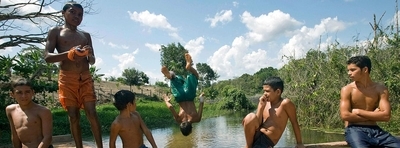
Drowning takes more than 300 000 lives a year – 30 every hour – and almost a quarter of them are children under five. Globally, it is among the ten leading causes of death for children aged 5-14 years.

More than 90% of drowning deaths occur in rivers, lakes, wells, domestic water storage vessels and swimming pools in low- and middle-income countries, with children and adolescents in rural areas disproportionately affected.

The theme for World Drowning Prevention Day 2026 is “Unite to turn the tide.”

The Global Strategy for Drowning Prevention calls every sector and every level of society to one goal: unite to reduce drowning by 35% by 2035.

Closing the gap depends on all of us doing our part – every person, in every place, in every context.

World Drowning Prevention Day, declared through the April 2021 UN General Assembly Resolution A/RES/75/273 “Global drowning prevention”, is held annually on 25 July. This global advocacy event serves as an opportunity to highlight the tragic and profound impact of drowning on families and communities and to offer life-saving solutions to prevent it.

All stakeholders – governments, UN agencies, civil society organizations, the private sector, academia and individuals – are invited to mark World Drowning Prevention Day by highlighting the need for urgent, coordinated and multi-sectoral action on proven measures such as:

-installing barriers controlling access to water;

-providing safe places away from water such as crèches for pre-school children with capable childcare;

-teaching swimming, water safety and safe rescue skills;

-training bystanders in safe rescue and resuscitation;

-setting and enforcing safe boating, shipping and ferry regulations;

-improving flood risk management.

Did you Know

Image

International Day on Judicial Well-being 25 July

The United Nations Convention against Corruption (UNCAC) , especially Article 11, acknowledges this danger and calls for safeguarding the independence and integrity of the judiciary.

Judicial well-being is a prerequisite for judicial independence, integrity, and efficiency. When judges are supported, they are better equipped to resist undue influence, uphold ethical standards, and deliver justice fairly and competently.

The path to international recognition began with the Regional Judicial Conference on Integrity and Judicial Well-being, held in Nauru in July 2024. Organized by the United Nations Office on Drugs and Crime (UNODC) in partnership with the Nauru Judiciary, the gathering brought together nearly twenty judicial leaders and global experts to confront a shared concern: judges around the world are under pressure, often without the resources or acknowledgment they need.

On 25 July 2024, they adopted the Nauru Declaration on Judicial Well-being which recognizes that the health and well-being of judges is critical to ensuring judicial integrity, independence, and the quality of justice delivered to the public.

Building on the momentum of the Nauru Declaration, in March 2025, the United Nations General Assembly adopted Resolution A/RES/79/266, officially proclaiming 25 July as the International Day for Judicial Well-being.

The resolution ties the observance directly to international legal frameworks like the United Nations Convention against Corruption (UNCAC), emphasizing that judicial well-being supports anti-corruption, access to justice, and sustainable peace.

The official theme for the 2026 International Day for Judicial Well-being (observed on 25 July) is "Well-being Upholds Judicial Integrity."

Did you Know

Image

International Day for Women and Girls of African Descent | 25 July

On 25 July, the world marks the International Day for Women and Girls of African Descent, proclaimed by the United Nations in 2024 and celebrated for the first time in 2025. The date coincides with the International Day of Black Latin American and Caribbean Women, commemorated since 1992, and recognizes decades of advocacy by women of African descent around the world.

The day is an opportunity not only to celebrate the leadership, achievements, knowledge, and resilience of women and girls of African descent, but also to draw attention to the structural barriers they continue to face at the intersection of racism and sexism. It reminds us that visibility, dignity, equal participation, and access to power are essential conditions for realizing human rights and building inclusive societies.

For cities, these questions are particularly relevant. Local governments shape many of the spaces where people experience belonging or exclusion in everyday life. Municipal action therefore plays a crucial role in ensuring that women and girls of African descent can participate fully, are protected from discrimination, and see themselves reflected in the institutions and leadership of their cities.

One important dimension of this is representation. Representation is not only about visibility. It influences whose perspectives inform public decision-making, who feels welcome in public institutions, and what future generations believe is possible.

The theme for the 2026 International Day for Women and Girls of African Descent (July 25) aligns with the overarching United Nations Second International Decade for People of African Descent (2025–2034): "People of African descent: recognition, justice and development.

Did you Know

Image

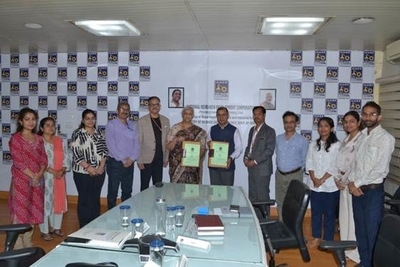
NRDC, NCISM sign MoU to promote innovation in Indian System of Medicine

The National Research Development Corporation (NRDC) and the National Commission for Indian System of Medicine (NCISM), a statutory body under the Ministry of Ayush, Government of India, signed a Memorandum of Understanding (MoU) to establish a strategic partnership for promoting innovation, intellectual property (IP) management, technology transfer and commercialization of research outcomes in the Indian System of Medicine.

The MoU provides a comprehensive framework for collaboration to identify, protect, develop and commercialize innovative technologies and intellectual property generated by NCISM-regulated institutions and registered practitioners of the Indian Systems of Medicine. The partnership seeks to bridge the gap between research and commercialization by creating an enabling ecosystem for innovation-driven growth in Ayurveda, Unani, Siddha and Sowa-Rigpa.

Under the collaboration, NRDC will extend its expertise in intellectual property protection, patent and trademark facilitation, technology assessment, valuation, licensing, technology transfer, industry linkage and commercialization of technologies. The Corporation will also provide mentoring to innovators, facilitate incubation support, promote industry-sponsored research, and assist institutions in developing effective intellectual property management practices and commercialization strategies.

NCISM will facilitate engagement between NRDC and its regulated institutions, Research, Innovation and Entrepreneurship Development (RIED) Cells, and registered medical practitioners across the country. Institution-specific technical, commercial and financial engagements arising from the collaboration will be undertaken directly between NRDC and the respective institutions or innovators.

The collaboration will support a broad spectrum of activities, including identification and protection of intellectual property, patent and trademark filing, innovation mentoring, entrepreneurship development, institutional IP policy formulation, capacity-building programmes, innovation awareness initiatives, ideathons, hackathons, technology showcases, industry interactions, and the dissemination of research and innovation success stories. The partnership will also encourage the translation of academic and clinical research into validated products, technologies and services capable of addressing healthcare needs while contributing to the growth of the innovation ecosystem in the Indian System of Medicine.

Did you Know

Image

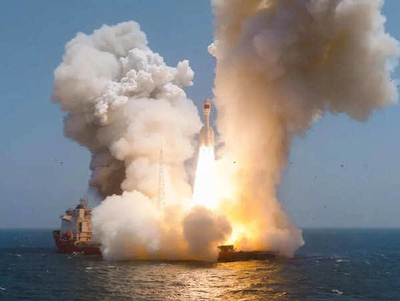
China Launches Gravity-1 Y4 Rocket. Places Nine Satellites into Orbit

China on successfully launched its Gravity-1 commercial rocket from the East China Sea, placing nine satellites into their designated orbits and carrying out one payload experiment. The mission marked the first far-sea launch by a privately developed commercial rocket, demonstrating China's growing capability in long-range maritime launch operations.

Developed by ORIENSPACE, the 30-metre, 405-tonne Gravity-1 lifted off at 10:54 am from a launch vessel operated by the Oriental Aerospace Port in Shandong province. The launch was conducted under the direction of the Taiyuan Satellite Launch Center.

The payload included nine satellites—Dongpo-13, Dongpo-14, Dongpo-17 to Dongpo-20, Xiguang-2 01, Tianyi-49 and Lilac-3. The six Dongpo-series satellites, comprising optical and synthetic aperture radar (SAR) payloads, will join an existing constellation to improve remote-sensing coverage for applications such as land mapping, disaster response, agriculture, forestry and water management.

Meanwhile, Xiguang-2 01 and Tianyi-49 are designed for AI-powered Earth observation, offering services in mineral exploration, environmental monitoring, urban planning and agriculture. Lilac-3 will test next-generation satellite platform and attitude-control technologies through in-orbit demonstrations.

Gravity-1 is the world's first medium-lift launch vehicle with all-solid-propellant strap-on boosters, capable of carrying 6.5 tonnes to low-Earth orbit and 4.2 tonnes to a 500-km sun-synchronous orbit.

Did you Know

Image

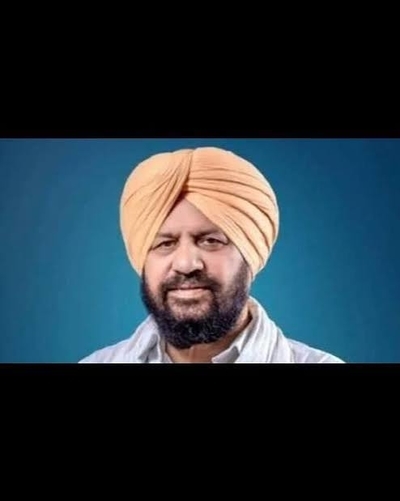
Shri Harjit Singh Grewal assumes charge as Chairman, National Commission for Minorities

Shri Harjit Singh Grewal assumed office as Chairman, National Commission for Minorities. This appointment marks the beginning of a renewed commitment towards promoting the welfare, inclusion, empowerment and socio-economic development of minority communities.With extensive experience in public life and organizational leadership, he has been actively involved in promoting social harmony, public welfare, and inclusive development.

Smt. S. Munawari Begum, Member, NCM assumed office as Vice Chairperson of the Commission on 20th July, 2026. With extensive experience in public service, she is expected to play a pivotal role in advancing the Commission's mandate of protecting minority rights, promoting equal opportunities, and strengthening inclusive governance.

Shri Grewal , Chairman, NCM on his arrival at the Commission, was warmly welcomed by Dr. Atya Nand , Joint Secretary, NCM and other senior officers. The Commission also welcomed Shri Glenn Souza Ticlo who assumed office as a Member representing the Christian community. A distinguished public representative, Shri Ticlo served two consecutive terms as a Member of the Goa Legislative Assembly (MLA) from the Aldona constituency between 2012 and 2022.

Shri Berjis Desai joined National Commission for Minorities on 10th March, 2026 as the Member representing the Parsi community. A respected public figure, and renowned writer, Shri Desai has earned recognition as an esteemed High Court advocate.

With the induction of the Chairman, Vice Chairperson, and Members representing diverse minority communities, the National Commission for Minorities is poised to further strengthen its efforts towards ensuring justice, equality, empowerment, and inclusive development.

Did you Know

Image

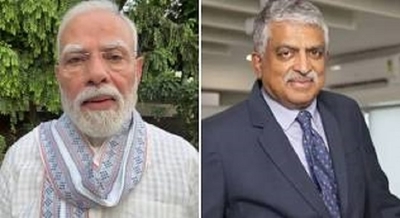
PM Modi Announces Task Force On Exam Reforms Under Infosys Co-Founder

Prime Minister Narendra Modi on July 26, 2026 announced the constitution of a high-powered task force, to be headed by former UIDAI chairman Nandan Nilekani, to recommend steps to make the country’s examination system leak-proof and technology-driven.

Mr. Nilekani has worked with the Union Government in the past to set up the Aadhaar ecosystem and Unified Payments Interface (UPI). He is also the chairman of the governing body of the economic policy research think tank, the National Council of Applied Economic Research (NCAER), and a co-founder of Infosys.

A multidisciplinary panel of domain experts will help revamp the National Testing Agency (NTA) examination system, especially from a technology perspective, and bring about structural reforms in the system, the committee will consist of former UIDAI chairman Nandan Nilekani, former ISRO Chairman S Somnath, former IB director Tapan Deka, IIT Chennai director V. Kamakoti, former Education Secretary Anita Karwal and logistics expert Amrit Lal Meena.

Did you Know

Image

Centre Launches DISHA 2.0 with ₹255 Crore Outlay to Expand Technology-Driven Access to Justice Across India

Designing Innovative Solutions for Holistic Access to Justice (DISHA) 2.0, Scheme is a Central Sector Scheme with an approved financial outlay of Rs. 255 crore for the period 2026-31 for pan India implementation, including Andhra Pradesh. DISHA 2.0 aims at leveraging technology to develop and enhance the outreach of citizen friendly solution platforms for legal services. It includes four components viz. Tele-Law: Reaching the Unreached (free pre litigation advice to all); Nyaya Bandhu (Pro Bono legal Services) Programme; Legal Literacy and Legal Awareness Programme and VIDHI (Vision for Integrated Delivery of Harmonized Legal Initiatives)-Sanjeevani.

The Tele-Law connects people with panel lawyers through mobile-app and Toll-Free No. 14454 for rendering pre-litigation legal advice and through use of video/tele conferencing facilities available at the Common Service Centres (CSCs)/Village Level Entrepreneurs (VLEs) at the panchayat level. Nyaya Sahayaks, who are active community based legal facilitators, have been engaged in the Aspirational Blocks to strengthen service delivery.

Did you Know

Image

775 Fast Track Special Courts Functional Across 29 States/UTs; Centre Extends FTSC Scheme Till September 2026

A Centrally Sponsored Scheme to set up Fast Track Special Courts (FTSCs), including exclusive POCSO (ePOCSO) courts was launched in October 2019, for the expeditious trial and disposal of pending cases related to rape and offences under the Protection of Children from Sexual Offences (POCSO) Act, 2012. The Scheme has been extended twice, with the last extension valid up to 31.03.2026 for establishment of 790 FTSCs. The Scheme has been temporarily extended upto 30th September, 2026. As per the information made available by the High Courts, as of 30.04.2026, 775 FTSCs, including 398 exclusive POCSO (e-POCSO) Courts were functional in 29 States/UTs.

The funds under the FTSC Scheme are released on the pattern of Centrally Sponsored Scheme (Central share: State share :: 60:40, 90:10) to cover the salaries of one Judicial Officer along with 7 support Staff per FTSC and a Flexi Grant for meeting the day-to-day expenses. The funds are reimbursed to the States/UTs after receipt of the expenditure statements from them. The Department has released a sum of ₹1259.51 crore to the States/UTs since its inception to ensure the smooth functioning of the courts.

To strengthen the functioning of FTSCs, regular review meetings are held via Video Conferencing with the States/UTs and the High Courts. The Hon’ble Minister of Law & Justice has written to Hon’ble Chief Ministers and Chief Justices of the High Courts regarding need for timely action and strict compliance with timelines under the POCSO Act and Bharatiya Nagarik Suraksha Sanhita, 2023. In addition, the performance of FTSCs is a regular agenda item in the Inter-State Zonal Council meetings to improve inter-governmental coordination and expedite justice delivery.

As regards the recruitment of judges and staff in courts, filling up of vacant positions of the judicial officers in District and Subordinate courts including the FTSCs, is the responsibility of the State/UT Governments and the concerned High Courts. As per the Constitutional framework, in exercise of powers conferred under proviso to Article 309 read with Articles 233 and 234 of the Constitution, the State/UT Government in consultation with the respective High Court frames the rules regarding the recruitment and appointment of Judicial Officers.

The primary responsibility for the development of infrastructure facilities for District and Subordinate Courts in the States/UTs, rests with the State/UT Governments. However, to augment the resources of the State /UT Governments, the Union Government has been implementing a Centrally Sponsored Scheme for the Development of Infrastructure Facilities for District and Subordinate Courts by providing financial assistance to the State/UT Governments in the prescribed fund sharing between Center and States since 1993-94. At present, there are five components of the Scheme for which Central assistance is granted to the States/UTs viz (i) Court Halls (ii) Residential Units (iii) Lawyers’ Halls (iv) Toilet Complexes and (v) Digital Computer Rooms. An amount of ₹4,519.47 crore has been provided as financial assistance to the States/UTs under the Centrally Sponsored Scheme for the Development of Infrastructure Facilities for Judiciary during the XV Finance Commission cycle.

Did you Know

Image

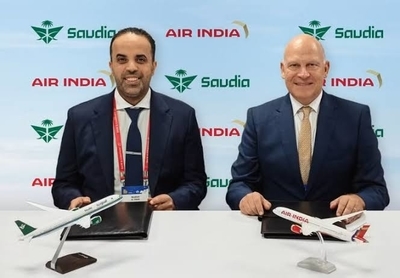
Air India and Saudia sign MoU to expand strategic cooperation

Air India, India’s leading global airline, and Saudia, the national flag carrier of Saudi Arabia, have signed a Memorandum of Understanding (MoU) to expand strategic cooperation between the two airlines. Building on their existing codeshare agreement, the MoU aims to strengthen connectivity between Saudi Arabia and India while supporting the continued growth of travel between the two countries.

The MoU sets out a phased approach to developing the partnership. Areas of cooperation include expanding the existing codeshare agreement, improving connectivity across both airlines’ networks, exploring terminal co-location and exploring further operational and commercial opportunities, including cooperation between their loyalty programs.

The two parties will also assess opportunities to extend the partnership in the future to other airlines within their respective groups, including flyadeal and Air India Express.

Since its privatisation in 2022, Air India has significantly expanded its global alliance network. Today, the airline maintains 25 codeshare partnerships and more than 120 interline agreements with leading carriers worldwide, providing seamless access for Air India customers to over 1,000 destinations globally.

Did you Know

Image

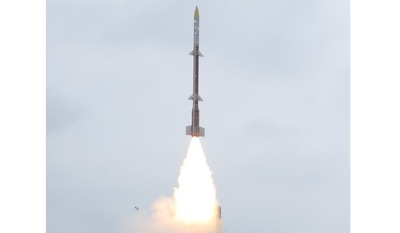
DRDO successfully conducts maiden flight test of long-range surface-to-air missile Kusha

The Defence Research and Development Organisation (DRDO) has successfully conducted the maiden flight test of the long-range surface-to-air missile Kusha from Dr APJ Abdul Kalam Island off the coast of Odisha. The Ministry of Defence said the test was conducted against an electronic target simulating a high-speed, high-altitude aerial threat, which was successfully intercepted by the missile system.

The Ministry said the Kusha missile system is capable of neutralising a wide range of aerial threats, including fighter aircraft, missiles, unmanned aerial vehicles and large enemy aircraft across a broad range and altitude envelope.

Defence Minister Rajnath Singh congratulated the DRDO and all other stakeholders on the successful test. In a social media post, he said the achievement marks an important milestone in India’s defence research and development. Mr Singh said the capability to develop a long-range surface-to-air missile system is possessed by only a handful of nations. He added that the missile system will reduce India’s dependence on imports and significantly strengthen the country’s air defence capability.

Did you Know

Image

Argentina's Nicolas Otamendi retires from international football

Argentina defender Nicolas Otamendi announced his retirement from ​international football on Thursday, bringing the ‌curtain down on a 17-year ​career during which he ⁠won the 2022 World Cup and two Copa America titles.

The 38-year-old centre ‌back made 139 appearances for his country and ‌was part of the squad ‌that ⁠reached this year’s World ⁠Cup final in the United States, in which the defending champion was beaten ​1-0 by Spain.

Otamendi ​recently joined Argentine giants River Plate after ending a ⁠successful 16-year spell in Europe, where ⁠he played for Porto, Valencia, Manchester City and Benfica.

He ‌represented his country at four World Cups.

Did you Know

Image

Union Minister Pralhad Joshi appointed as Education Minister following resignation of Dharmendra Pradhan

Union Minister for Education Pralhad Joshi officially took charge of the Ministry of Education at Kartavya Bhavan. The Minister also holds charge of the Union Ministries of Consumer Affairs, Food and Public Distribution, and New and Renewable Energy.

Mr. Joshi was appointed as Education Minister after Dharmendra Pradhan resigned from the post.

Mr. Joshi chaired a review meeting of the Ministry, in which he assessed the implementation of various schemes and other initiatives.

The President Droupadi Murmu, as advised by the Prime Minister, has accepted the resignation of Dharmendra Pradhan from the Union Council of Ministers, with immediate effect, under clause (2) of Article 75 of the Constitution of India.

Did you Know

Image

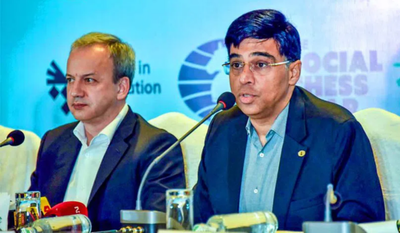
Viswanathan Anand takes charge as FIDE interim President

Five-time world champion Viswanathan Anand has taken charge as Interim President of the International Chess Federation (FIDE) after its Russian President, Arkady Dvorkovich, was placed on the latest European Union sanctions list.

Anand will serve as Interim President for as long as Dvorkovich remains subject to the restrictive measures under the applicable Swiss and European Union laws and regulations.

Did you Know

Image

Infosys Appointed Ashiss Kumar Dash as CEO-Designate

Infosys has named company veteran Ashiss Kumar Dash as its Chief Executive Officer-designate, signalling a carefully planned leadership transition as the Indian IT services giant positions itself for its next phase of AI-led growth.

The appointment, approved by the board on the recommendation of the Nomination and Remuneration Committee, will see Dash serve as CEO-designate until 31 March 2027. He is set to assume the roles of Chief Executive Officer and Managing Director from 1 April 2027, subject to the necessary regulatory and shareholder approvals.

Dash will succeed Salil Parekh, who will step down after completing his second five-year term at the helm. Parekh will continue to lead the company until the end of March 2027, providing nearly two years for an orderly leadership handover.

A nearly three-decade veteran of Infosys, Dash currently serves as Executive Vice President and Global Head of Services, Utilities, Resources, Energy and Enterprise Sustainability.

Did you Know

Image

Economy India eases FDI rules for e-commerce firms to boost exports of locally made goods

The government relaxed foreign direct investment (FDI) rules for the e-commerce sector, allowing foreign-funded e-commerce entities to operate inventory-based models exclusively for exports of goods manufactured or produced in India, in a move aimed at expanding overseas market access for Indian sellers.

“In order to facilitate greater exports through easier and increased access of global markets by Indian sellers, the extant FDI policy has been reviewed and it is decided that the restrictions on inventory-based model of e-commerce shall not apply in case of exports of domestically manufactured and/or produced goods/products,” according to Press Note 3 of 2026 notified by the Department for Promotion of Industry and Internal Trade (DPIIT).

Did you Know

Image

Govt brings ₹3,030 crore scheme for setting up three large chemical parks

The government on July 24, 2026 announced a new ₹3,030-crore scheme for setting up three large chemical parks, each spreading across at least 2,000 acres, an initiative aimed at making India self-reliant in the sector.

Announcing the Cabinet decision, Information & Broadcasting Minister Ashwini Vaishnaw said each park could see investments in the range of ₹20,000 crore to ₹50,000 crore and the scheme will act as a "multiplier".

The Cabinet, chaired by Prime Minister Narendra Modi, has approved Bharat Audyogik Vikas Yojana Rasayan, or BHAVYA-Rasayan Scheme, to establish three dedicated chemical parks in the country.

The scheme, announced in the Union Budget of the 2026-27 fiscal, will have a total financial outlay of ₹3,030 crore.

According to an official statement, Rs 3,000 crore would be towards the cost of establishing the common infrastructure facilities and basic utilities inside the parks. The remaining Rs 30 crore will be for the administrative expenditure.

The scheme would run for a period of 5 years from the current fiscal to 2030-31.

In response to a question, Mr. Vaishnaw said that the total investment for the the establishment of these three parks will be significantly higher than this. The outlay (₹3,030 crore) is only for common infrastructure."

The investments on each park could be to the tune of ₹20,000 crore to ₹50,000 crore, he said, adding that the scheme would act as a "multiplier" in attracting investments.

The Centre would provide a grant of up to ₹1,000 crore per park. However, this will be subject to the minimum contribution of ₹500 crore by the concerned state government.

The facilities include a common effluent treatment plant (CETP); treatment, storage, and disposal facility (TSDF), water supply and distribution systems; solvent recovery and distillation facilities; steam generation and distribution network; interconnected pipeline network; and logistics and warehousing facilities.

The sector produces chemicals and petrochemicals that are used in various downstream sectors such as agriculture, textiles, pharma, nutraceuticals, construction, automobile and electronics.

Did you Know

Image

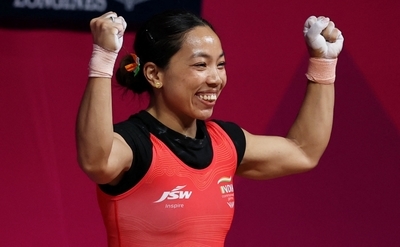
Mirabai Chanu wins India’s first gold at Commonwealth Games 2026 in weightlifting

India’s weightlifting queen Mirabai Chanu has won first Gold medal for the country at the 2026 Commonwealth Games in Glasgow. She dominated the women’s 48kg weightlifting event with a record-breaking total lift of 190 kilograms. The 31-year-old weightlifter set new Commonwealth Games records by lifting 85 kilograms in the snatch and 105 kilograms in the clean and jerk. The triumph also earned her a third consecutive Commonwealth Games Gold medal, following her victories in 2018 and 2022.

India added two more silver medals in weightlifting. Chanambam Rishikanta Singh finished second and bagged Silver medal in the men’s 60kg event with a total lift of 264 kilograms. He equalled the Commonwealth Games record in the snatch with 121 kilograms before lifting 143 kilograms in the clean and jerk.

Raja Muthupandi claimed silver in the men’s 65kg category with a combined lift of 286 kilograms, comprising 126 kilograms in the snatch and 160 kilograms in the clean and jerk. Malaysia’s Muhamad Aznil Bin Bidin took the gold with a Games record total of 299 kilograms.

India also made progress in boxing. Jadumani Singh advanced to the men’s 55kg quarter-finals after defeating Pakistan’s Sumama Rehman, while Preeti Pawar moved into the women’s 54kg quarter-finals with a victory over Malawi’s Deborah Mtenje.

India’s medal tally now stands at four with one gold, two silver and one bronze. Para-powerlifter Jhandu Kumar had opened the country’s account with a bronze medal in the men’s heavyweight event on the opening day of competition.

Did you Know

Image

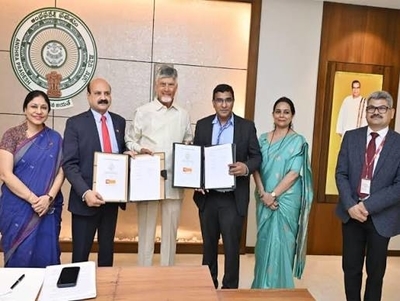
PNB partners with Andhra to launch India’s first quantum finance hub

Punjab National Bank (PNB) has signed an MoU with the AP Quantum Mission in the presence of Chief Minister N Chandrababu Naidu and PNB MD & CEO Ashok Chandra, to establish a Quantum Finance Innovation Hub at the Amaravati Quantum Computing Centre, making PNB the first bank in India to partner with a State government for a quantum finance facility.

The hub will focus on strengthening cybersecurity in banking, developing advanced systems for proactive financial fraud detection, and building secure digital financial ecosystems using quantum technologies. It will function as a collaborative platform for industries, academic institutions, research organisations, and government agencies.

Beyond quantum computing, the hub will also drive research in Artificial Intelligence and other emerging technologies, while creating a skilled workforce for these domains.

Naidu said the hub is a key milestone in the government’s vision to transform Amaravati into a global centre for quantum. He urged PNB to launch initiatives to improve digital literacy among public, stressing that governments and banks must work together to build confidence in digital financial services.

He also called for using quantum tech to combat cybercrime and digital arrest scams, and to ensure the highest security for digital transactions.

Did you Know

Image

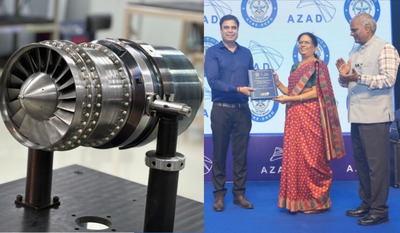
India develops first indigenous expendable turbo jet engine in 350 kg thrust class

India has developed its first indigenous Expendable Turbo Jet Engine in the 350 kg thrust class. The engine has been developed by the Defence Research and Development Organisation’s (DRDO) Gas Turbine Research Establishment (GTRE).

The Ministry of Defence said the development of such a complex system based on DRDO’s design reflects the growing technological capabilities of the Indian defence industry. It said the achievement marks the culmination of years of precision engineering, advanced manufacturing and close collaboration between India’s scientific and industrial communities. The Ministry added that jet engine technology is regarded as one of the most sophisticated engineering disciplines in the world.

The engine was successfully realised and delivered to GTRE by Azad Engineering.

Did you Know

Image

DBS is first bank in Southeast Asia to be named “World’s Best Corporate Bank” by Global Finance

DBS announced that it has been named World's Best Corporate Bank at the 2026 Global Bank Awards by Global Finance, one of the leading financial trade publications in the world. This is the first time a Southeast Asian bank has won the award since the category was introduced in 2005.

Winners were selected based on performance over the past year and other criteria including reputation and management excellence. Global Finance's editorial board made the selections with input from corporate financial executives, analysts and bankers throughout the world.

In addition, DBS was also named Asia’s Best Bank and Singapore’s Best Bank.

Over the years, DBS has developed one of the region’s most comprehensive corporate banking franchises, serving businesses of all sizes – from growing SMEs to large multinational corporations. Through its global network, strong balance sheet, AI-enabled capabilities and deep industry knowledge, DBS provides clients with market insights, advisory services, tailored financing, hedging, cash management and trade finance solutions.

In 2026, DBS has been named “Best Bank for Corporate Banking in Asia” by Coalition Greenwich, “Best Bank for Financial Institutions in Asia-Pacific” by Global Finance for the second consecutive year, “Best Transaction Bank in Asia-Pacific” by Global Finance for three years running and “Best Bank for SMEs in Asia & Singapore” by Euromoney.

DBS is a leading financial services group in Asia with a presence in 19 markets. Headquartered and listed in Singapore, DBS is in the three key Asian axes of growth: Greater China, Southeast Asia and South Asia. The bank's "AA-" and "Aa1" credit ratings are among the highest in the world.

Did you Know

Image

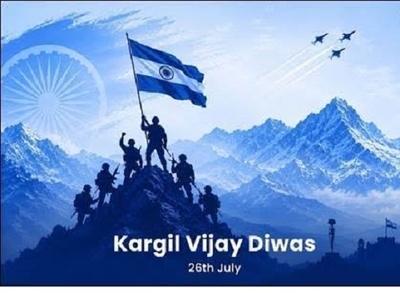
Kargil Vijay Diwas | 26 July

Every year on July 26, India pauses to remember one of the defining moments in its military history – the victory in the 1999 Kargil War. As the nation observes the 27th Kargil Vijay Diwas, it pays tribute to the soldiers whose courage, sacrifice and unwavering determination ensured the success of Operation Vijay and safeguarded India’s sovereignty.

More than a commemoration of military success, Kargil Vijay Diwas celebrates the indomitable spirit of the Indian Armed Forces and serves as a reminder of the values of courage, patriotism and national unity. The conflict also marked a turning point in India’s defence preparedness, leaving behind lessons that continue to shape the country’s military doctrine and drive its journey towards greater self-reliance.

The Kargil War remains one of the most remarkable chapters in India’s military history. In the summer of 1999, even as much of the country experienced soaring temperatures, fierce battles were fought across the icy, high-altitude terrain of Kargil in Ladakh.

Did you Know