Image

Coal Production in the Country Grows 7.51% YoY in July, 2026

India’s coal production witnessed a growth of 7.51% in July 2026, compared to the same period 2025. The overall coal production in the country during July 2026 reached 69.75 MT (Provisional), marking an increase over the 64.88 MT produced July, 2025. Meanwhile coal dispatch in July 2026 showed a robust growth of 17.34% YoY in July, 2026, reaching 86.33 MT (Provisional) during the month compared to 73.57 MT last year. The growth in coal production and dispatch underscores the Ministry of Coal's sustained commitment and efforts to ensuring consistent supply and operational stability across the sector.

The cumulative coal production up to July, in FY 2026-27 stood at 302.24 MT (Provisional), while the cumulative coal dispatch reached 354.70 MT (Provisional) , registering a growth of 5.87% over the same period of last Financial Year.

Coal India Limited contributed an impressive 50.35 MT (Provisional) to the July’s production figures, marking 8.42% growth over July, 2025. CIL dispatched 63.67 MT (Provisional) of coal during July, 2026, with a growth of 17.43% over coal dispatched during July, 2025. The cumulative coal dispatch by CIL also registered a growth of 6.81% up to July, in FY 2026-27, compared to same period 2025.
Did you Know

Image

47,328 Villages Selected Under PM-AJAY Adarsh Gram Component Across the Country; 435 Villages in Telangana

The Government of India is implementing the Pradhan Mantri Anusuchit Jaati Abhyuday Yojana (PM-AJAY) to promote the socio-economic development of Scheduled Caste communities through the integrated development of villages under its Adarsh Gram Component. The scheme aims to ensure saturation of key socio-economic indicators by converging Central and State Government schemes and addressing critical development gaps.

Minister of State for Social Justice and Empowerment Shri Ramdas Athawale Shares Details in written to Shri Anil Kumar Yadav Mandadi in Rajya Sabha. The House was informed that 47,328 villages have been selected across the country under the Adarsh Gram Component of PM-AJAY, including 435 villages in Telangana. State-wise details of the selected villages have been placed on the Table of the House.

The written reply further stated that the Adarsh Gram Component focuses on the integrated development of selected villages through the saturation of 50 monitorable socio-economic indicators across 10 sectors, including education. A need assessment survey is conducted to establish the baseline status of these indicators. Identified gaps are addressed through convergence with Central and State Government schemes or through interventions supported under PM-AJAY. Progress made by States is regularly updated on the PMAGY Portal.

The House was also informed that, across the country, 3,28,131 development works and 1,10,51,213 beneficiaries have been identified under the scheme. Of these, 46,642 development works have been completed, benefiting 47,59,399 beneficiaries so far.

With regard to Telangana, the written reply stated that under the education sector, 3,529 beneficiaries have been identified, out of which 472 beneficiaries have already received benefits under the scheme.

Did you Know

Image

India and Rwanda Hold First Joint Trade Committee Meeting to Deepen Bilateral Trade and Investment Cooperation

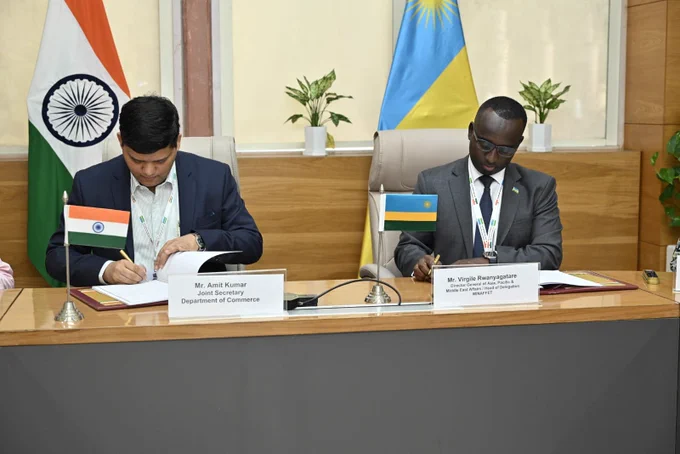
The First Session of the India–Rwanda Joint Trade Committee (JTC) was held in New Delhi on 30 and 31 July 2026. The Indian delegation was led by Joint Secretary, Department of Commerce, Shri Amit Kumar, while the Rwandan delegation was led by Director General, Asia, Pacific and Middle East Affairs, Ministry of Foreign Affairs and International Cooperation, Republic of Rwanda, Mr. Virgile Rwanyagatare.

Both sides reviewed the current state of bilateral trade in goods and services. India's principal exports to Rwanda include drug formulations and biologicals, two- and three-wheelers, industrial and electrical machinery, oil meals, and iron and steel products, while Rwanda's exports to India comprise lead, spices, essential oils, copper, precious and semi-precious stones, processed agricultural products and minerals. Both sides agreed to make concerted efforts to diversify the bilateral trade basket, facilitate business-to-business engagement and address market access issues.

India highlighted the potential to expand exports of heavy engineering goods, pharmaceuticals and medical devices, refined petroleum products, textiles, marine products, plastics, sports goods and toys, gems and jewellery, and scientific instruments. It was noted that India remains Rwanda's largest source of pharmaceutical imports, accounting for about 24.5 per cent of the country's pharmaceutical imports. Rwanda identified chillies, macadamia, French beans, avocados, essential oils, tea, coffee, other horticultural products, minerals and precious stones as priority exports to India. The two sides also discussed cooperation on harmonisation of standards, including capacity building between the Bureau of Indian Standards and the Rwanda Standards Board.

Did you Know

Image

NSDC and AVPL International Collaborate to Establish 350 Advanced Skill Centres for Drones Across India

In a major boost to India's emerging drone ecosystem and higher education landscape, the National Skill Development Corporation (NSDC) and AVPL International have entered into a strategic collaboration to establish 350 Advanced Skill Centres (ASCs) for Drone Technology across India over the next three years. The initiative aims to create one of the country's largest industry-integrated skilling networks, preparing thousands of students for careers in the rapidly expanding drone and advanced technology sectors.

The collaboration will commence with the establishment of 75 Advanced Skill Centres in the first year across leading private universities and engineering colleges. Designed as industry-operated Centres of Excellence, these facilities will bridge the gap between classroom learning and real-world industry requirements.

Did you Know

Image

RBI pushes Basel pillar 3 disclosure by 6 months to April 2027

The Reserve Bank of India postponed the final Basel III disclosure guidelines for banks to April 2027, from September 30, 2026, after considering stakeholder feedback. This is intended to give banks time to implement the necessary system and process upgrades.

The RBI also accepted the feedback to align the disclosure requirements with the expected credit loss (ECL) framework for capital charge for credit risk under standardised approach, which are effective from April 2027. Accordingly, it has modified the templates to incorporate ECL guidelines, the central bank said.

The RBI said banks must begin quarterly disclosures with the quarter ending June 30, 2027, and continue every quarter thereafter. For semi-annual disclosures, the first will cover the half-year ended September 30, 2027, with subsequent reports every six months. Annual disclosures will start with the financial year ended March 31, 2028, and thereafter on an annual basis.

The Basel III disclosures include key metric such as risk-based capital ratios, leverage ratio and liquidity standards, bank risk management approach and overview of risk-weighted assets.

The RBI also exempted public sector banks from disclosures on remuneration.

The regulator said banks should have a formal disclosure policy for Pillar 3 data which is approved by the board of directors.

The regulator exempted the disclosure of certain items where revealing them could expose a bank’s position or breach its legal obligations by making proprietary or confidential information public. However, banks should disclose more general information about the subject matter of the requirement.

Following stakeholders’ feedback, the RBI has also reduced the mandatory archive period for Pillar 3 reports on banks’ websites from 10 years to at least five years for prior reporting periods.

Did you Know

Image

Cabinet approves revamped Khelo India Scheme and enhanced Assistance to National Sports Federations (ANSFs)

The Union Cabinet chaired by the Prime Minister Shri Narendra Modi has approved an expanded Khelo India Scheme and enhanced Assistance to National Sports Federations (ANSFs) with a combined outlay of Rs.36,441 crore for the period 2026–27 to 2030–31, reaffirming the Government's commitment to harnessing the power of sports for youth development and nation-building.

This is the country's most ambitious sports development programme since Independence. The aspirations of the youth of the country towards sports has been given a major boost and will have a transformational impact over the coming decade.

The approved outlay is nearly eight times that of the previous Khelo India Scheme, reflecting the Government's commitment to making sports a cornerstone of youth development, nation-building and India's emergence as a global sporting powerhouse.

The revamped scheme is designed to create a seamless pathway for every talented young Indian—from school playgrounds and village sports fields to the Olympic podium. It seeks to ensure that no sporting talent is left undiscovered because of geography, economic background or lack of opportunity.

Aligned with the vision of Khelo Bharat Niti 2025 and the National Education Policy 2020, the scheme integrates sports with education, fitness, technology and high-performance training while laying a strong foundation for India's long-term sporting ambitions, including the 2030 Commonwealth Games and the country's bid to host the Olympic and Paralympic Games.

The scheme establishes an integrated nationwide sports ecosystem comprising National Centres of Excellence (NCOEs), Khelo India Centres of Excellence (KICoEs), SAI Training Centres (STCs), Khelo India Accredited Academies (KIAAs), Khelo India Centres (KICs) and Youth Sports Companies (YSCs) of the Armed Forces. Together, these institutions will provide world-class coaching, sports science support and modern infrastructure across the country.

To strengthen the school sports ecosystem, the Government has introduced two new initiatives—Khelo India Feeder Schools (KIFS) and Khelo India Utkrishta Vidyalayas (KIUV)—which will integrate sports with mainstream education and enable early identification and systematic nurturing of talented children.

A major reform under the scheme is the creation of the Emerging Khelo India Athletes (E-KIAs) category alongside the existing Khelo India Athletes programme. This will expand the structured athlete development ecosystem by nearly ten times, bringing thousands of additional young athletes under professional coaching, scientific support and long-term mentoring.

Did you Know

Image

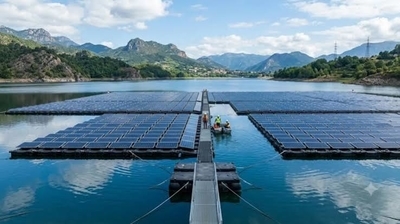
Cabinet approves Rs 5,070 crore PM Surya Sarovar Yojana for 5,000 MW floating solar projects

The Union Cabinet chaired by the Prime Minister Shri Narendra Modi approved the ‘Pradhan Mantri Surya Sarovar Yojana (PM-SSY)’, a Scheme for the development of Floating Solar Photovoltaic (FSPV) Projects with Energy Storage Systems (ESS) with a total outlay of Rs.5,070 crore.

The scheme envisages the development of 5,000 MW of Floating Solar Photovoltaic projects with co-located Energy Storage Systems having a minimum storage capacity of two hours i.e.,10,000 MWh. The projects will be sanctioned during FY 2026-27 to FY 2030-31, with disbursement of financial support continuing up to FY 2032-33.

The approval follows the recent assessment undertaken by the National Institute of Solar Energy (NISE), which has estimated a floating solar potential of approximately 102.18 GWp across reservoirs and other suitable inland water bodies in the country.

Under the scheme, Central Financial Assistance (CFA) of Rs. One crore per MW will be provided for eligible Floating Solar Photovoltaic projects after successful commissioning. In addition, CFA of up to Rs.50 lakh per project will be available for undertaking feasibility studies, including bathymetry and hydrography assessments, environmental studies, and other preparatory activities required for de-risking the project development.

All States and Union Territories will benefit through this scheme. The scheme would enhance the floating Solar PV capacity in the country by 5,000 MW, which is presently around 700 MW only. These projects would provide an opportunity to gainfully utilize existing reservoirs & industrial ponds, and eliminate competition for scarce land resources. The integration of an energy storage system will help strengthen grid reliability. The scheme would help in the reduction of around 10 million tonnes of CO₂ emissions annually. It would help in the generation of approximately 16,000–17,000 full-time equivalent employment opportunities across the project value chain. The scheme would also promote domestic manufacturing of floatation systems as well as the entire value chain of the projects, like PV cells, modules, energy storage systems, etc., and support the vision of Aatmanirbhar Bharat.

Did you Know

Image

Union Cabinet approves ₹84,084 crore for offshore exploration scheme ‘Samudra Manthan’

Seeking to provide a fillip to India’s offshore exploration, the Union Cabinet on July 31, 2026 approved an outlay of ₹84,084 crore for the Union Petroleum Ministry’s National Offshore Exploration Scheme, titled ‘Samudra Manthan’.

The corpus is to be utilised until fiscal year 2030-31. The overall outlay is categorised into four key components. The most important of these relates to drilling 60 deepwater exploration wells for which the Cabinet has allocated ₹43,200 crore.

This is inclusive of the government of up to 50% of eligible drilling cost or ₹675 crore per well.

The other component relates to offshore data acquisition which carries an outlay of ₹28,534 crore.

Development of common offshore infrastructure hubs to facilitate commercialisation of discoveries which would be accounting for an outlay of ₹10,000 crore.

Finally, the establishment of oil and gas manufacturing and services zones – seeking to promote domestic manufacturing and localisation of critical equipment and services – tabulate an outlay of ₹2,000 crore.

Overall, the Union government’s flagship scheme for offshore exploration aims at catalysing reserves of more than 600 million metric tonnes of oil equivalent (MMTOE).

It envisages to “stimulate significant investments across the exploration and production value chain, creating long-term opportunities for industry, innovation and economic growth.”

Did you Know

Image

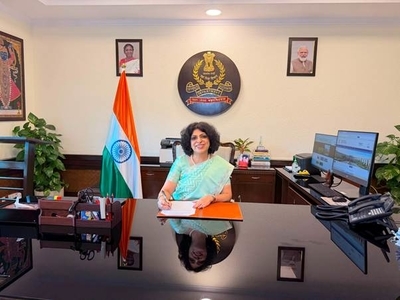
Smt Alka Nangia Arora takes charge as Controller General of Defence Accounts

Smt Alka Nangia Arora, a 1991-batch officer of the Indian Defence Accounts Service (IDAS), assumed charge as the Controller General of Defence Accounts (CGDA), on August 1, 2026.

An alumnus of Garhwal University, Dehradun and IIT Roorkee, Smt Arora has tenanted key appointments in the Government of India, including as Additional Secretary & Financial Adviser in Department of Agricultural Research and Education (DARE) under the Ministry of Agriculture, Joint Secretary in the Ministry of Micro, Small & Medium Enterprises, Managing Director of Central Cottage Industries Corporation of India Limited, and Additional Development Commissioner for Handicrafts under the Ministry of Textiles. Bringing over three decades of extensive experience in defence financial management and public service, she has led several initiatives in promotion of handicrafts, agricultural research, procurement policy and public finance, supported by advance training from premier institutions, including IIM Bangalore and ISB Mohali.

Smt Arora began her career in the Ministry of Defence at Dum Dum Ordnance Factory in Kolkata, and since then has held key appointments in the Defence Accounts Department (DAD). She has served with all three armed forces, including as FA to Admiral Superintendent of the Naval Dockyard (ASD) in Mumbai, FA to the Army Eastern Command and head of the Area Accounts Office in Kolkata, as IFA to the Western Air Command (WAC) and Army Hospital Research & Referral (AHRR), and Principal IFA to the Air Force Headquarters. She has held the post of Additional & Special CGDA at the CGDA Headquarters, steering policies concerning Audit, IT & Systems, IFA & Training.

Did you Know

Image

Vice Admiral AN Pramod assumes charge as Deputy Chief of Naval Staff

Vice Admiral AN Pramod has assumed charge as the Deputy Chief of Naval Staff today. An alumnus of the 38th Integrated Cadet Course, Naval Academy, Goa, Vice Admiral AN Pramod was commissioned into the Indian Navy in Jul 1990. In a distinguished career spanning over 36 years, the Flag Officer has held a wide range of command, operational, instructional, and staff appointments, both afloat and ashore.

As Director General of Naval Operations between December 2023 to July 2026, he was closely involved in the planning, preparedness, and operational readiness of the Indian Navy during Operation Sindoor and the conduct of maritime security operations during the ongoing West Asia crisis.

In recognition of his distinguished service and operational leadership, the Flag Officer was awarded the Ati Vishisht Seva Medal in 2024 and the Yudh Seva Medal in 2025.

Did you Know

Image

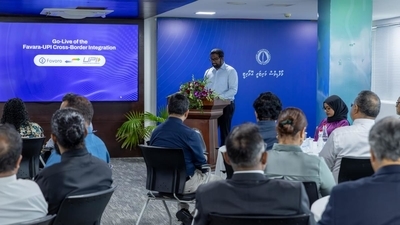
Favara-UPI cross-border payment corridor goes live between Maldives, India

NPCI International Payments Ltd (NIPL) and Maldives Monetary Authority (MMA) have announced the successful go-live of the integration between the Maldives’ Instant Payment System 'Favara', and Unified Payments Interface (UPI).

This marks a transformative milestone in cross-border digital financial connectivity and bilateral economic cooperation between the Maldives and India, the Finance Ministry said in a statement on July 31, 2026.

Following the launch of the service on Thursday (July 30), individuals from the Maldives can now transfer funds in real time to UPI-enabled bank accounts in India through their mobile banking applications.

The service has commenced with the participation of two local banks — Bank of Maldives Plc and Maldives Islamic Bank Plc, it said, adding, customers of these banks can initiate person-to-person (P2P) transfers directly to UPI-enabled bank accounts in India using their mobile banking applications and the Favara payment rail.

The implementation reflects close collaboration between the MMA, the Reserve Bank of India (RBI), NIPL, participating financial institutions, and other stakeholders in both countries.

Subsequent phases of the collaboration will introduce additional cross-border payment use cases, including QR-based merchant payments and other innovative digital payment services, further strengthening economic and financial ties between the Maldives and India, it said.

UPI is accepted in the nine countries — Cambodia, Singapore, United Arab Emirates, France, Mauritius, Nepal, Bhutan, Qatar, and Sri Lanka — enabling Indian travellers to make seamless payments abroad through UPI.

NPCI, an initiative of the Reserve Bank of India (RBI) and the Indian Banks' Association, is an umbrella organisation for operating retail payments and settlement systems in India (IBA).

Did you Know

Image

Varsha Ashok Aglawe becomes first woman GSI Director General in 176-year history

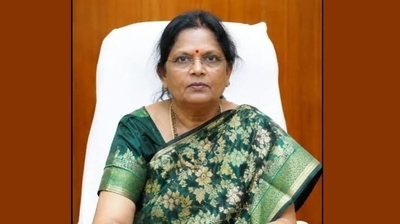
The Geological Survey of India on July 31, 2026 said Varsha Ashok Aglawe has assumed charge as its 54th director general, becoming the first woman to head the country's premier geoscientific organisation in its 176-year history.

Ms. Aglawe, a palaeontologist with over three decades of experience, succeeds Asit Saha, who served as the GSI director general for two years.

She joined GSI in 1992 after a stint with the Indian Bureau of Mines. Ms. Aglawe recently served as the additional director general and head of department, eastern region, in Kolkata.

On taking charge, she said GSI would align its programmes with the government's priorities on critical mineral exploration and mineral security.

The surveyor will focus on accelerating exploration of deep-seated and concealed mineral deposits, expanding offshore mineral exploration and strengthening laboratory infrastructure, she said.

Ms. Aglawe also stressed the need to promote advanced geoscientific research, natural hazard studies, glaciology and capacity building for young geoscientists while enhancing scientific publications, the GSI said.

Did you Know

Image

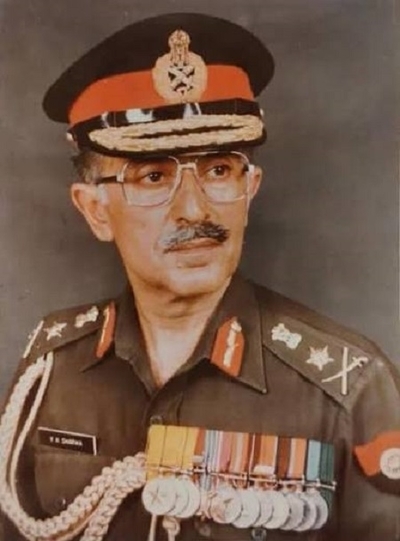
Former Chief of the Army Staff (COAS), General Vishwa Nath Sharma, passed away

General Vishwa Nath Sharma, the army chief who led the Indian Army through a period of turbulence marked by the insurgency in Punjab and the deployment of the Indian Peace Keeping Force (IPKF) in Sri Lanka, died in New Delhi at the age of 97.

Better known as General V. N. Sharma, he was the first President’s commissioned officer to become the Army chief. Commissioned into the Armoured Corps’ 16th Light Cavalry, he served as the 14th Chief of Army Staff (COAS) from 1 May 1988 to 30 June 1990.

Hailing from an illustrious military family, he was the son of late Major General Amar Nath Sharma.

Apart from the challenges in Punjab and Sri Lanka, he also inherited an active internal security scenario amid heightened tensions with Pakistan and the growing unrest in Jammu and Kashmir.

He took over as Army Chief from General K Sundarji, the architect of Operation Brasstacks and one of the Indian Army’s foremost military reformers.

While Gen Sundarji’s tenure saw a push for mechanisation and technological modernisation of the force, Sharma’s tenure was more measured, with a strong operational focus on both internal security and conventional warfare.

Did you Know

Image

FinMin launches Protection & Indemnity Insurance product under Bharat Maritime Insurance Pool

The Department of Financial Services under the Ministry of Finance on July 30, 2026 launched India's first sovereign-backed Protection and Indemnity insurance product under Bharat Maritime Insurance Pool (BMIP), designed by the New India Assurance Company.

On this occasion, Financial Services Secretary Sanjay Lohia handed over the first Protection & Indemnity (P&I) insurance policy document to Shipping Corporation of India Ltd.

The insurance provides financial protection against third-party liabilities, including Crew & Cargo liability, pollution liability, wreck removal, 24x7 port correspondent network with an indemnity limit up to $1.5 billion, through the combined capacity of the pool, the Finance Ministry said in a statement.

Since the operationalisation of BMIP by DFS on May 12, 2026, backed by a sovereign guarantee, the pool has demonstrated substantial market acceptance and has successfully met its primary objective of providing uninterrupted war risk insurance capacity to Indian stakeholders, it said.

With the introduction of BMIP, the war risk premium rates have decreased by approximately 35-40%, compared with the levels observed at the height of the West Asia conflict.

As on July 20, 2026, a total of 1,608 policies covering Cargo War risks and Hull War risks have been issued under the Pool.

While the BMIP mechanism ensures the continuity of maritime war risk insurance coverage, fosters the development of domestic underwriting capacity, and enhances confidence among India's shipping and trade stakeholders, extending the pool to include Protection & Indemnity (P&I) coverage would further strengthen India's maritime risk management framework and improve the resilience of its maritime insurance ecosystem, it said.

Did you Know

Image

Cabinet approves continuation of the PM-KISAN Scheme from 2026-27 to 2030-31 with a Financial Outlay of Rs.3.15 lakh crore

The Union Cabinet chaired by the Prime Minister Shri Narendra Modi has approved continuation of the Pradhan Mantri Kisan Samman Nidhi (PM-KISAN) Scheme from 2026–27 to 2030–31. A total financial outlay of Rs.3.15 lakh crore has been approved for the Scheme during this period.

The approval reiterates the Government’s commitment that the prosperity of farmers forms the foundation of the nation’s prosperity. Through the PM-KISAN Scheme, timely and transparent income support is being provided to eligible farmer families through the Direct Benefit Transfer (DBT) system, enabling farmers to increase agricultural investment and strengthen their livelihoods.

Did you Know

Image

GI tag to Gujarat’s Pithora painting boosts tribal art and livelihoods

The Pithora painting, a centuries-old wall art tradition of Gujarat’s Rathwa tribal community, has received a Geographical Indication (GI) tag, enhancing its recognition and supporting the preservation of cultural heritage while creating new opportunities for tribal artisans.

The GI tag ensures the authenticity of this traditional art form, protects indigenous knowledge, and is anticipated to widen market access for artisans, thereby encouraging younger generations to maintain the longstanding tradition.

Artist Paresh Rathwa explained, “Even today, traditional Pithora paintings adorn the main walls of homes in our communities. Earlier, they depicted horses, gods and goddesses, along with animals, birds, forests, water and nature. These paintings were not merely decorative but were created as part of sacred rituals and held deep cultural and spiritual significance.” He noted that the paintings remain an integral part of the cultural identity of the Rathwa, Bhil, Bhilala and Nayaka communities in Chhota Udepur district.

Traditionally created by Lakharas using natural colours derived from leaves, flowers, minerals and mahua, Pithora paintings are celebrated for their vivid portrayals of mythology, rituals, and nature.

Did you Know