
Reading a newspaper every day can feel confusing at first too many pages, too much information, and not enough clarity on what actually matters for the exam. Many aspirants either read everything (and waste time) or skip it completely (and miss important content). The truth is simple newspaper reading is one of the most powerful tools for regulatory exams if done the right way. In this blog, we will help help you to understand exactly what to read, how to read, and how to use it for exams like RBI Grade B, NABARD Grade A, and other banking and regulatory exams.
Why is newspaper reading important for regulatory exams?
Newspaper reading is important because it acts as a primary source for current affairs, descriptive answers, and conceptual clarity needed in these exams.
| Area | How It Helps You in the Exam |
| Current Affairs | Covers economy, banking, government schemes, and global events directly asked in exams |
| Descriptive Writing | Helps you form structured answers with real examples and data |
| Concept Clarity | Explains topics like inflation, GDP, repo rate through real-world context |
| Vocabulary & Language | Improves writing quality for descriptive papers |
| Direct Exam Questions | Many questions are directly based on newspaper data and events |
| Discipline Building | Daily reading builds consistency and keeps preparation on track |
Which newspapers should you read for regulatory exams?
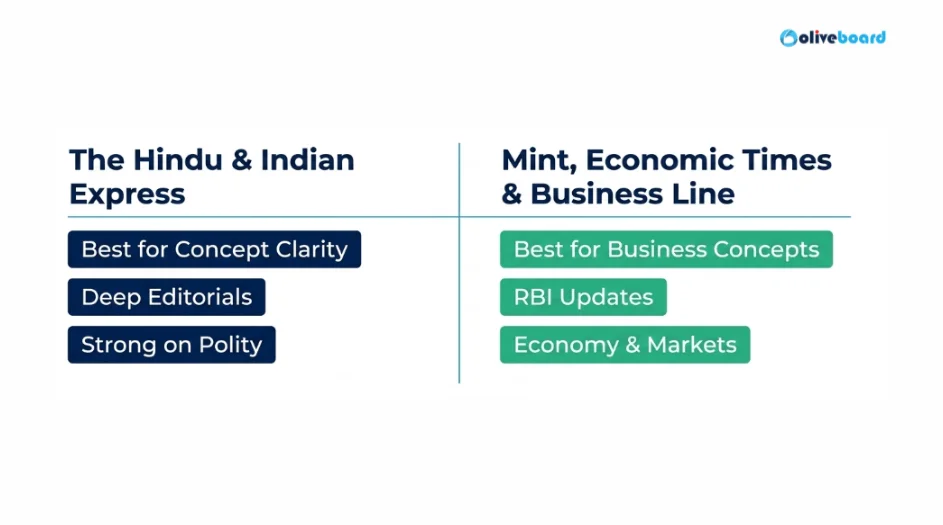
You should choose newspapers that focus more on economy, finance, and policy rather than general news.
| Newspaper | Why It Is Useful |
| The Hindu | Best for editorials and conceptual clarity |
| The Indian Express | Strong analysis of polity and economy |
| Mint | Explains business concepts in simple language |
| The Economic Times | Covers markets, RBI updates, economic policies |
| Business Line | Focused on economy and financial sector |
What should you read in a newspaper for regulatory exams?
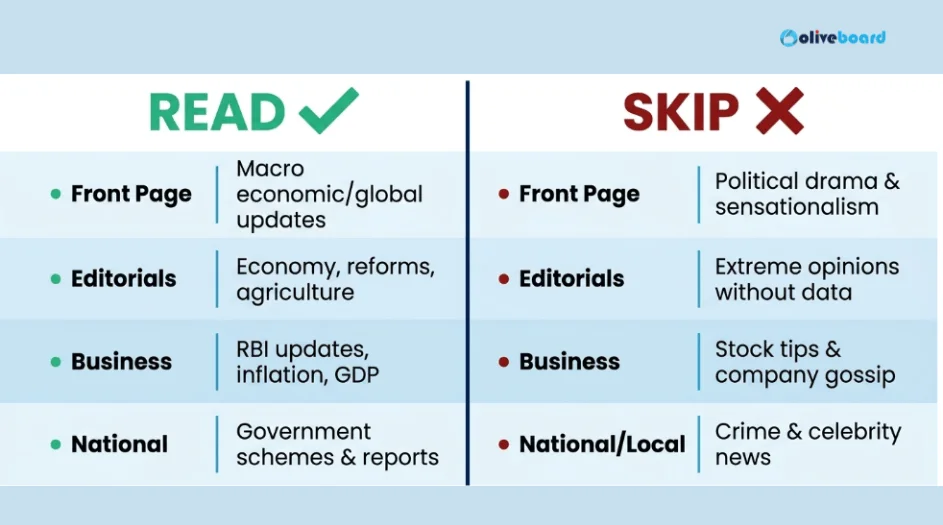
You should read only those sections that directly help your syllabus and exam needs. The goal is to filter the right information and avoid wasting time on irrelevant news.
| Section | What to Focus On | What to Skip |
| Front Page | • Major economic updates (GDP, inflation, policies) • Important national decisions • Key international developments | • Political drama and debates • Sensational headlines • Unverified breaking news |
| Editorials & Op-Eds | • Economy and financial reforms • Agriculture and environment issues • Social and policy-based discussions • Balanced arguments with facts | • Extreme opinions without data • Biased or one-sided views • Articles not linked to syllabus |
| Business & Economy | • RBI policies and updates • Inflation, GDP, repo rate • Banking sector news • Government economic reports | • Stock tips and trading advice • Company-specific news • Daily market fluctuations |
| National News | • Government schemes and initiatives • Policy changes and reforms • Reports and surveys • Agriculture and rural development news | • Crime stories • Local incidents • Political speeches without policy value |
| International News | • Global summits (G20, BRICS) • International organizations • Global economic developments • India’s role in world affairs | • Minor global events • Routine diplomatic visits • Low-impact international news |
| Science & Tech | • AI and digital developments • Space missions and ISRO updates • Agri-tech and health missions • Government innovation schemes | • Gadget launches • Product reviews • Tech advertisements |
| Miscellaneous | • Awards and recognitions • Important appointments • Reports and indices • Obituaries of notable personalities | • Celebrity news • Entertainment updates • Lifestyle content |
How should you read the newspaper step by step?
You should read the newspaper in a structured and step-by-step manner so that you can save time, focus only on relevant information, and improve retention. Instead of reading everything, start by scanning headlines, then read important articles actively, make short notes, build vocabulary, and revise regularly. This approach ensures that your newspaper reading becomes exam-oriented, efficient, and easy to remember.
| Step | What to Do | How to do it clearly |
| 1. Skim first, then read deeply | Select important news | Spend 5–10 minutes scanning headlines. Pick only exam-relevant topics and ignore the rest |
| 2. Read actively | Extract useful information | Highlight facts, data, reasons, and impact. Always think: “Can this be asked in exam?” |
| 3. Make short notes | Convert reading into revision material | Write 4–5 points in simple words. Organize into topics like Economy, Banking |
| 4. Maintain vocabulary | Improve writing skills | Note new words, meanings, and one example sentence |
| 5. Revise regularly | Retain information | Revise weekly and update notes |
Also Check:
| Exam | Practice Quiz Link |
| RBI Grade B Practice Quiz | Download PDF |
| RBI Grade B FM Practice Quiz | Download PDF |
| RBI Grade B ESI Practice Quiz | Download PDF |
| RBI Grade B Reasoning Quiz | Download Now |
| RBI Grade B Quantitative Aptitude Quiz | Download Now |
How should your newspaper strategy change for each exam stage?
Your approach should change because each stage tests different skills.
| Exam Stage | What to Focus On | How to Prepare |
| Phase 1 | Facts and data | Focus on GDP, inflation, schemes, RBI updates. Memorize key numbers |
| Phase 2 | Analysis and writing | Understand concepts deeply. Write 200–300 word answers using examples and data |
| Interview | Opinions and awareness | Build your own views, understand trends like fintech, banking reforms |
How should you make notes from newspapers effectively?
Note-making is the most important step because it connects reading with revision.
| Method | How to Apply |
| Topic-wise Notes | Divide into Economy, Banking, Environment, International |
| Month-wise Notes | Maintain notes month by month for easy revision |
| Highlight Key Data | Box important numbers like GDP, inflation |
| Use Bullet Points | Keep notes short and simple |
| Add Implications | Write 1–2 lines on impact of the news |
| Link with Syllabus | Mention related topic (ESI, ARD, Finance) |
| Separate by Stage | Phase 1 (facts) and Phase 2 (analysis) notes separately |
| Use Symbols | Mark important/interview topics with Star {*} |
| Mind Maps | Use for complex topics like monetary policy |
| Do Extra Research | Use Google to understand background, concept, and impact |
How can you move from reading to deep understanding?
You should not just read you should analyze and understand the full picture.
| Step | What to Do |
| Understand Background | Know what the topic is and why it started |
| Learn the Concept | Understand related concepts (e.g., inflation, repo rate) |
| Analyze Impact | Know how it affects economy, banking, society |
| Connect with Syllabus | Link with static topics |
| Add Examples | Use real-world data in answers |
how can newspaper reading help in descriptive paper?
Newspaper reading plays a crucial role in improving your descriptive paper performance because it helps you develop both content and writing skills together. By regularly reading editorials and important articles, you learn how to structure your answers in a clear format with a proper introduction, logical arguments, and a strong conclusion.
It also provides you with real data, reports, and examples that you can use to make your answers more relevant and impactful. Over time, this habit improves your ability to present balanced arguments, enhances your language clarity, and builds a professional writing style needed for scoring well in descriptive exams.
| Skill | How it improves |
| Answer Writing | Practice writing 200–300 words on important topics |
| Content | Use real data, reports, examples |
| Structure | Learn introduction–body–conclusion format |
| Argument | Understand both sides of issues |
| Language | Improve clarity and professionalism |
How can newspaper reading help in the interview stage?
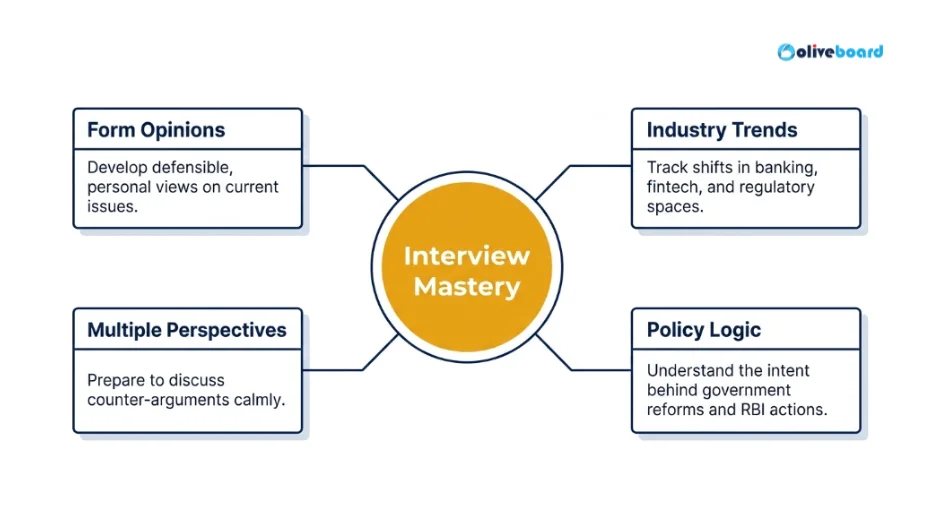
Newspaper reading is extremely important for the interview stage because it helps you stay aware of current events and develop well-informed opinions. In interviews, you are not just expected to know facts but also to explain your views on issues related to the economy, banking, and policies.
Regular reading helps you understand trends, form balanced perspectives, and support your answers with real examples from recent news. This makes your responses more confident, practical, and relevant during the interview.
| Area | What to Prepare |
| Opinions | Develop your own views on current issues |
| Industry Trends | Banking, fintech, regulatory changes |
| Policy Understanding | Government reforms and RBI actions |
| Multiple Perspectives | Be ready to discuss both sides |
| Real Examples | Use recent news in answers |
How much time should you spend reading the newspaper?
You should spend around 45–60 minutes daily on newspaper reading with a focused and consistent approach. Instead of reading everything, divide your time between skimming, reading important articles, and making short notes. This ensures effective coverage without wasting time.
| Activity | Time Allocation |
| Skimming headlines | 5–10 minutes |
| Reading important articles | 25–30 minutes |
| Note-making | 10–15 minutes |
| Weekly revision (Sunday) | 1–2 hours |
| Weekend deep reading | Optional for important topics |
How can you improve retention of what you read?
To improve retention, you need to actively revise and use what you read instead of just going through it once. Regular revision, short summaries, and discussing topics help you remember information for longer. This approach ensures better recall during the exam.
| Technique | How it helps |
| Weekly Revision | Revising once a week helps you remember information for a longer time |
| Make Short Summaries | Summarizing news in your own words makes revision faster and easier |
| Explain to Others | Teaching or explaining a topic improves your understanding and clarity |
| Discuss with Peers | Talking with others helps you see different viewpoints and remember better |
| Link with Concepts | Connecting news with basic concepts improves long-term retention |
What are the best tips and tricks to read newspapers effectively?
Newspaper reading becomes effective only when you follow a clear and practical approach instead of reading randomly. The right habits help you save time, stay focused on the syllabus, and improve both understanding and retention.
- Be Consistent – Read the newspaper daily at a fixed time to build a strong habit
- Focus on Relevance – Read only exam-related news and avoid unnecessary sections
- Quality over Quantity – Focus on understanding important topics instead of reading everything
- Focus on Data – Pay attention to numbers, reports, and statistics asked in exams
- Link with Syllabus – Always connect news with ESI, ARD, and finance topics
- Do Smart Revision – Revise weekly to improve retention and recall
- Don’t Panic – It’s okay to skip less important news and stay focused on key areas
Should you use other resources along with newspapers?
Yes, combining newspapers with other sources makes preparation stronger.
| Resource | How It Helps |
| Current Affairs PDFs | Quick revision and summary |
| Monthly Compilations | Covers missed topics |
| Video Analysis | Helps understand difficult concepts |
| Notes Apps | Organize and revise easily |
FAQs
It helps in current affairs, descriptive writing, and many questions are directly based on newspaper content.
The Hindu and The Indian Express are best for concepts, while The Economic Times is useful for economy-focused preparation.
Around 45–60 minutes is enough with a focused approach.
Yes, structured notes help in revision and answer writing.
Yes, this step-by-step approach is designed especially for beginners.
- RBI Grade A vs. Grade B: Check All Differences Between Grade A & B
- RBI Grade A Notification 2027, Exam Date & Eligibility
- RBI Calendar 2027 Out, Check Notification & Exam Date
- NABARD Grade A Practice Quiz, Download Free PDF
- NABARD Grade A Phase 2 Previous Year Question Papers, Download PDFs
- NABARD Grade A Previous Year Papers, Section-Wise PYPs & Free PDF
Hi, I’m Aditi. I work as a Content Writer at Oliveboard, where I have been simplifying exam-related content for the past 4 years. I create clear and easy-to-understand guides for JAIIB, CAIIB, and UGC exams. My work includes breaking down notifications, admit cards, and exam updates, as well as preparing study plans and subject-wise strategies.
My goal is to support working professionals in managing their exam preparation alongside a full-time job and to help them achieve career growth.