

Key Takeaways
- Understanding RRB JE Cut-Off Analysis helps candidates strategise their preparation for the 2026 exam.
- The cut-off depends on total vacancies, the number of applicants, exam difficulty, and reservation categories.
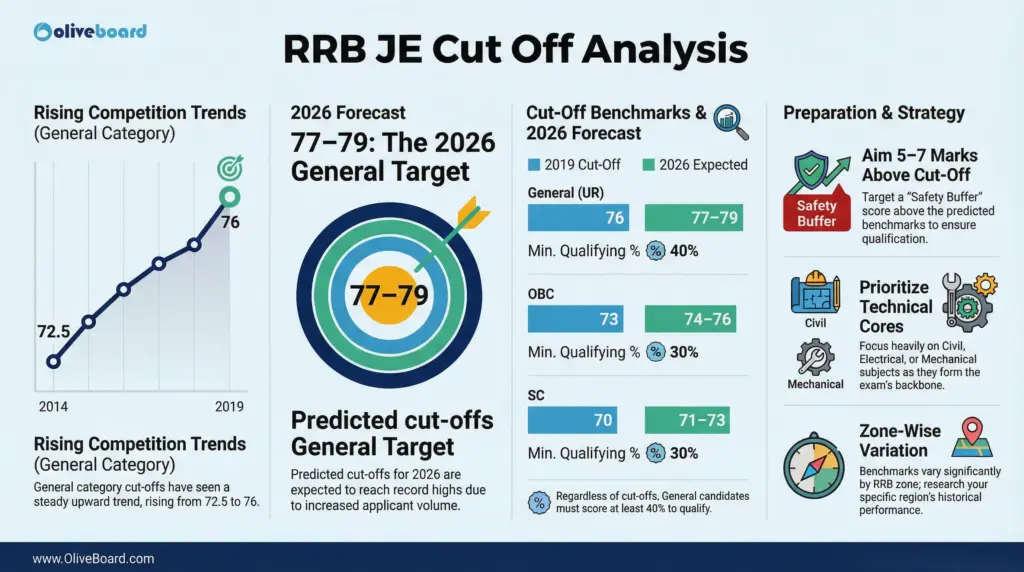
- Historical cut-offs from 2014 to 2019 indicate rising competition, with predicted cut-offs for 2026 ranging from 67 to 79 based on category.
- To prepare effectively, candidates should aim for scores 5–7 marks above the cut-off and focus on core technical subjects.
- Minimum qualifying marks vary between 25% and 40%, depending on the category and zone.
For aspirants targeting the Railway Recruitment Board Junior Engineer (RRB JE) exam in 2026, understanding cut-off trends is crucial to strategise preparation. Knowing the cut off range helps candidates prepare for the exam effectively. This article presents a detailed RRB JE Cut-Off Analysis from 2014 to 2019 and predicts likely benchmarks for the upcoming 2026 cycle.
What is RRB JE Cut-Off?
The RRB JE Cut-Off is the minimum qualifying mark that candidates must achieve to move forward in the recruitment process. Cut-offs are influenced by factors such as:
- Total vacancies available
- Number of applicants
- Exam difficulty level
- Reservation categories (SC/ST/OBC/General)
Historical RRB JE Cut-Off (2014–2019)
Analysing historical cut-offs can give aspirants a realistic target score for preparation. The following table summarises the RRB JE Previous Year Cut Off for various categories over multiple years:
| Year | Total Vacancies | General | OBC | SC | ST | EWS |
| 2014 | 15,000 | 72.5 | 70 | 67 | 63 | 71 |
| 2015 | 18,000 | 74 | 71 | 68 | 64 | 72 |
| 2016 | 14,500 | 70 | 67 | 64 | 60 | 68 |
| 2017 | 16,200 | 73 | 70 | 66 | 62 | 71 |
| 2018 | 17,500 | 75 | 72 | 69 | 65 | 73 |
| 2019 | 20,000 | 76 | 73 | 70 | 66 | 74 |
Why is knowing the RRB JE Cut Off Trends important?
Knowing the cut-off trends is important as it helps candidates divide the high and low weightage topics as per the RRB JE Syllabus. Some of the important observations from the cut-off of previous year trends are given below for the candidates:
- General Category Cut-Off:
- Slight upward trend from 72.5 (2014) to 76 (2019).
- Indicates increasing competition and higher accuracy expectations.
- OBC, SC, and ST Cut-Offs:
- Proportional increase observed across all reserved categories.
- Gap between General and reserved categories remains roughly 3–6 marks.
- Impact of Vacancies:
- More vacancies in 2019 led to slightly higher cut-offs, showing aspirants’ competition is rising faster than vacancies.
- Difficulty Level Influence:
- Years with easier exams (2016) showed slightly lower cut-offs.
- Harder papers (2018–2019) led to higher qualifying marks.
RRB JE Previous Year Cut Off for CBT 1
In the table below, we have provided the previous year cut off for the RRB JE CBT 1 exam in 2024. Check it out:
| RRB Zone | UR | OBC | SC | ST |
| Ahmedabad | 65 | 60 | 48 | 43 |
| Ajmer | 63 | 58 | 53 | 47 |
| Allahabad | 62 | 56 | 49 | 42 |
| Bangalore | 53 | 48 | 35 | 34 |
| Bhopal | 62 | 54 | 46 | 33 |
| Bhubaneswar | 61 | 56 | 51 | 48 |
| Bilaspur | 63 | 55 | 46 | 42 |
| Chandigarh | 71 | 62 | 56 | 49 |
| Chennai | 61 | 48 | 42 | 36 |
| Gorakhpur | 73 | 67 | 56 | 49 |
| Guwahati | 72 | 67 | 63 | 56 |
| Jammu | 65 | – | 48 | 42 |
| Kolkata | 59 | 54 | 48 | 39 |
| Malda | 73 | 69 | 62 | 54 |
| Mumbai | 63 | 55 | 44 | 37 |
| Muzaffarpur | 74 | 69 | 63 | 55 |
| Patna | 79 | 76 | 69 | 58 |
| Ranchi | 75 | 69 | 62 | 56 |
| Secunderabad | 68 | 61 | 54 | 43 |
| Siliguri | 69 | 59 | 54 | 48 |
| Thiruvananthapuram | 52 | 46 | 38 | 30 |
What was the RRB JE Previous Year Cut Off for CBT 2?
The previous year cut off for RRB JE CBT 2 ranged from 30 – 80, depending upon the RRB zone. The details are provided below as per the different categories:
| Zone | UR | OBC | SC | ST |
| Ahmedabad | 65 | 60 | 48 | 43 |
| Ajmer | 63 | 58 | 53 | 47 |
| Allahabad | 62 | 56 | 49 | 42 |
| Bangalore | 53 | 48 | 35 | 34 |
| Bhopal | 62 | 54 | 46 | 33 |
| Bhubaneswar | 61 | 56 | 51 | 48 |
| Bilaspur | 63 | 55 | 46 | 42 |
| Chandigarh | 71 | 62 | 56 | 49 |
| Chennai | 61 | 48 | 42 | 36 |
| Gorakhpur | 73 | 67 | 56 | 49 |
| Guwahati | 72 | 67 | 63 | 56 |
| Jammu | 65 | – | 48 | 42 |
| Kolkata | 59 | 54 | 48 | 39 |
| Malda | 73 | 69 | 62 | 54 |
| Mumbai | 63 | 55 | 44 | 37 |
| Muzaffarpur | 74 | 69 | 63 | 55 |
| Patna | 79 | 76 | 69 | 58 |
| Ranchi | 75 | 69 | 62 | 56 |
| Secunderabad | 68 | 61 | 54 | 43 |
| Siliguri | 69 | 59 | 54 | 48 |
| Thiruvananthapuram | 52 | 46 | 38 | 30 |
What is the expected RRB JE Cut-Off for 2026?
Based on historical trends, exam difficulty, and rising competition, predicted cut-offs for 2026 will range between 67 and 79, as per the category of applicants. Given below are the details:
| Category | Expected Cut Off 2026 |
| General | 77–79 |
| OBC | 74–76 |
| SC | 71–73 |
| ST | 67–69 |
| EWS | 75–77 |
How can I prepare for the exam based on RRB JE Cut-Off Analysis?
To prepare efficiently for the upcoming RRB JE examination, candidates must attempt to score more than the minimum qualifying marks. Some of the important strategies to be followed are given below:
- Target Score:
- Aim at 5–7 marks above the predicted cut-off to ensure safe qualification.
- Focus Areas:
- Core technical subjects relevant to Civil, Electrical, and Mechanical branches.
- General Awareness and Reasoning sections carry moderate weight but can boost scores.
- Mock Tests & Revision:
- Regular practice with previous years’ papers helps gauge the right pace and accuracy.
- Focus on time management as RRB JE CBT has strict time limits.
What are the minimum qualifying marks for RRB JE?
The minimum qualifying percentage will vary from 25% – 40% as per the zone and category of the candidate. Check out the relevant details:
| Category | Minimum Qualifying Percentage |
| UR | 40% |
| OBC | 30% |
| SC | 30% |
| ST | 25% |
FAQs
Based on historical trends and rising competition, the predicted cut-off for RRB JE 2026 is 77–79 for General, 74–76 for OBC, 71–73 for SC, 67–69 for ST, and 75–77 for EWS categories.
The cut-off is based on exam difficulty, number of vacancies, number of applicants, category reservation, and normalisation of multi-shift exams.
Yes, more vacancies can slightly lower cut-offs, while fewer vacancies or higher competition generally push the cut-off higher.
Yes, each RRB zone may have minor variations due to region-wise normalisation and differences in applicant strength, but trends are usually similar nationwide
Aspirants should aim 5–7 marks above the predicted cut-off, focus on core technical subjects, practice previous year papers, and take mock tests to improve speed and accuracy.

Hello! This is Arijit Dutta. I am a skilled Content Writer at Oliveboard with nearly 3+ years of experience in crafting engaging, informative, and exam-focused content for the Railways Domain. With a strong command of language and a keen understanding of learner needs, I contribute significantly to Oliveboard’s mission of delivering high-quality educational resources. Passionate about clear communication and continuous learning, I consistently create content that helps government job aspirants achieve their goals. Outside of work, I enjoy playing cricket and listening to music, which helps me stay balanced and creative in my professional journey.