
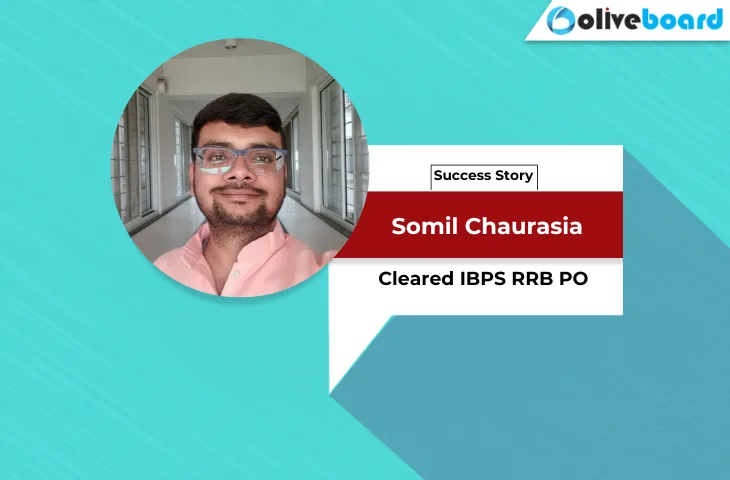
Clearing the IBPS RRB PO exam in the very first attempt is a massive achievement. Somil Chaurasia did exactly that right after graduating from NIT Nagpur, securing his place in UP Gramin Bank. What stands out in his success story is not just the final result, but the absolute clarity of his bank exam preparation approach. His strategy was focused, practical, and built around consistent practice using the right digital resources.
Coming from a village background, Somil had a deep motivation behind choosing a career in banking. Having seen the real-world financial challenges faced by farmers, he wanted to contribute at the grassroots level. This genuine sense of purpose helped him stay disciplined and consistent throughout his daily preparation.
From Engineering to Banking
Somil graduated in July 2025, but his competitive exam journey started earlier during his campus placement season in 2024. He noticed that the syllabus of major banking exams heavily overlapped with what he had already studied for placement aptitudes – especially Quantitative Aptitude, Logical Reasoning, and English. That alignment made the transition much smoother.
“I wanted a stable career,” Somil shares. “With changing global conditions and family responsibilities, banking felt like the right choice.”
After a short initial preparation phase followed by a brief break, he restarted seriously after graduation. He revised his core notes quickly and moved immediately into intensive IBPS RRB PO mock test practice.
A Practical and Smart IBPS RRB PO Strategy
Somil did not try to study everything. Instead, he focused on studying smartly and prioritizing high-yielding exam topics. His core IBPS RRB PO strategy was built on three simple principles:
- Focusing on high-weightage topics instead of the entire syllabus.
- Maintaining strict confidence and exam-day temperament.
- Analyzing mistakes consistently to avoid repeating them.
“Not every topic needs deep preparation,” he notes. “Some topics just need basic conceptual clarity, while others need a strong command.” To support this, he relied on structured learning through Oliveboard online courses, recorded classes, and concept videos, which helped him revise efficiently without wasting time.
Section-Wise Strategy That Made the Difference
1. Turning Banking Awareness into a Strength
Initially, General and Banking Awareness was his weakest section and had even cost him a previous exam. This time, he turned it into a high-scoring area with a disciplined, high-yield approach:
- Targeted Study Material: He relied heavily on Oliveboard’s monthly GA PDFs and watched targeted revision videos.
- Pattern Analysis: He thoroughly analyzed previous year papers to understand exactly what trends the actual exam followed.
- Deep Revision: He focused on just 3 to 4 months of current affairs content but revised it multiple times rather than skimming 6 months of data superficially.
- Time Allocation: He dedicated about 4 hours daily to GA, dividing it between morning and night sessions.
“GA is the only section where you can attempt almost all questions if you prepare well,” he says.
2. Quant and Reasoning Focused on Speed
With his engineering background, Somil’s core mathematical concepts were already strong. Instead of relearning basics, his entire focus shifted toward maximizing speed and accuracy.
He practiced relentlessly through sectional tests, previous year papers, and specialized mock tests available on Oliveboard. His approach was simple: practice regularly, track performance metrics, and shave off valuable seconds per question. In these sections, time management is the real game-changer.
3. English Gave Him an Edge
English was one of his strongest areas. Although it was not part of the RRB Prelims phase, he didn’t ignore it. His strong foundation paid off massively in the Mains exam, where English was included, allowing him to maintain high scores consistently and outpace the competition.
100 Plus Mocks in 40 Days Changed Everything
The most critical turning point in Somil’s preparation was his systematic mock test strategy. In the 40 days leading up to the exam, he attempted more than 100 mock tests using Oliveboard’s test series.
However, the real magic was in his daily analysis routine:
- He maintained a dedicated Excel sheet to track his raw scores, percentiles, mistakes, and weak topics.
- His initial scores started around the 60 to 65 percent mark.
- By consistently fixing the specific errors flagged in his Excel tracker, his scores gradually skyrocketed to the 95 to 96 percentile just before the actual exam day.
“Mocks alone won’t help. Proper data analysis is what actually improves your performance,” Somil emphasizes. This consistent tracking is what helped him build real exam temperament under pressure.
Ready to build your own exam temperament?
Transition from Prelims to Mains
For his Mains preparation, Somil followed a strictly structured, step-by-step approach:
Topic-Wise Practice➡️ Sectional Tests ➡️ Full-Length Mocks
He started with topic-wise practice using Oliveboard courses and question banks, shifted to sectional tests, and finally focused purely on full-length mock tests in the final 15 days.
This systematic preparation ladder helped his Mains mock scores consistently hit the 98 to 99 percentile range. Even for Computer Awareness, he kept it simple by revising basic PDFs and relying on mock analysis instead of over-studying.
Don’t leave your speed to chance. Attempt Oliveboard Sectional Tests regularly to master your time management before the big day.
Interview Experience and Preparation
Somil described his interview as highly balanced. While he realistically expected around 70 marks based on his performance, his final score turned out to be an impressive 77.
Attending Oliveboard’s online mock interviews helped him learn how to handle real panel pressure, polish his body language, and refine his responses to tricky situational questions. His key takeaway was simple: “You don’t need to know everything. Just stay confident and don’t panic if you don’t know an answer.”
Final Advice for Aspirants
Somil’s advice to banking aspirants looking for a foolproof bank exam preparation strategy is entirely practical:
- Prioritize Smartly: Focus heavily on high-weightage, frequently asked topics.
- Don’t Ignore GA: Treat general and banking awareness as your ultimate tie-breaker section.
- Embrace Analysis: Your mistakes are your best roadmap to improvement.
“Stay confident and keep improving. Failure in one exam does not define your future. When you work directly on your mistakes, the results will follow.”
Get ahead of the competition. Practice IBPS RRB Previous Year Papers to decode current exam trends.
Somil Chaurasia’s success story proves that clearing elite banking exams comes down to clarity, consistency, and utilizing the right ecosystem. From a rural background to clearing the IBPS RRB PO exam in his very first attempt, his story is as practical as it is inspiring.
If you are preparing for upcoming banking exams, take a page out of his playbook. Focus on smart preparation, analyze your weaknesses, and leverage structured platforms like Oliveboard to turn your hard work into a final selection.

I started my journey with storytelling and journalism, and somewhere along the way, I discovered how much I truly love writing. Words have always been my way of connecting with people.
With 4+ years of experience in content creation, social media, and video storytelling, I focus on building meaningful conversations, not just posts. I enjoy understanding audiences, planning engaging content, and turning followers into active, connected communities.
At Oliveboard, I work on creating value-driven content that informs, engages, and brings people together.