
When preparing for a Government job like RRB Technician, aspirants often focus intensely on exam preparation, syllabus, and cutoffs – but many overlook one of the make-or-break criteria in the selection process: the RRB Technician medical standard. Among medical parameters like general fitness and physical health, vision standards are critical, especially for posts involving technical and safety-sensitive duties. This article provides a deep, insightful exploration of these standards and explains what vision notations like 6/6 and 6/9 actually mean, why they matter, and how they are evaluated.
Why RRB Technician Medical Standards matter?
The RRB Technician medical standards matter as this job involves handling heavy machinery, working in various environments, and upholding safety standards. In order to perform these duties, candidates need to be physically and mentally fit. Only those who meet the specified medical norms are finally appointed. The RRB Technician Grade 3 Medical Standard 2026 and Grade 1 promotes workplace safety and efficiency, outlining the RRB Technician Medical Qualification required for applicants.
RRB Technician Medical Standard Overview
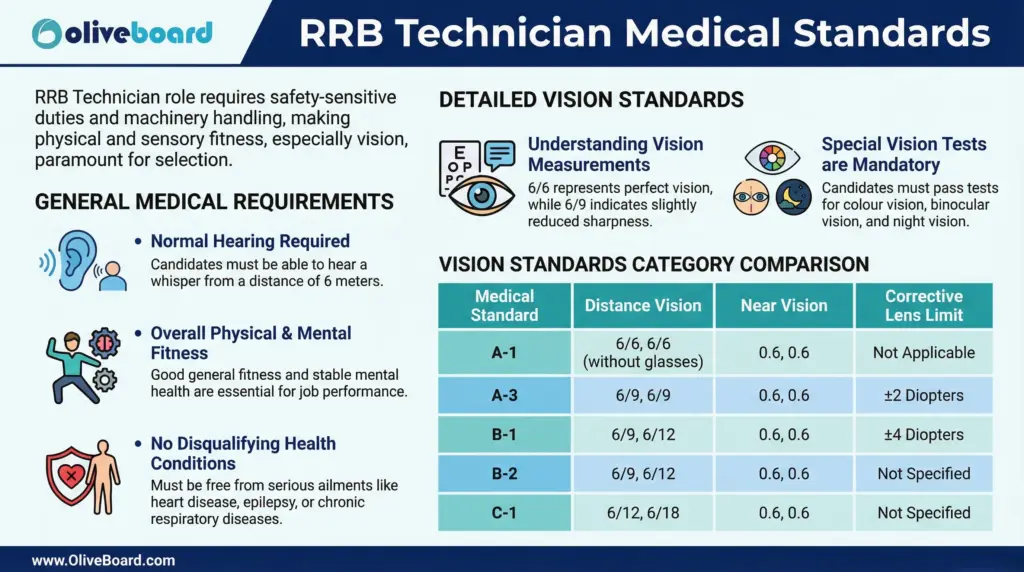
Candidates must note down the basic medical standard details as mentioned in the RRB Technician Notification. The table below shows the details:
| Criteria | Medical Standard |
| Vision Standards | – Distant Vision: 6/30 in one eye and 6/60 in the other eye. – Near Vision: 0.6 in one eye and 0.8 in the other eye. – Color Vision: Ability to distinguish colors; color blindness may disqualify a candidate. |
| Hearing Standards | Normal hearing ability; able to hear a whisper from 6 meters. |
| Physical Fitness | Good overall fitness; absence of medical conditions affecting job performance. |
| Mental Health | Stable mental health; serious mental illness may disqualify. |
| Other Medical Conditions | No serious medical conditions such as heart diseases, epilepsy, chronic respiratory diseases, or ailments that hinder job performance. |
Understanding Vision Measurements: 6/6 vs 6/9
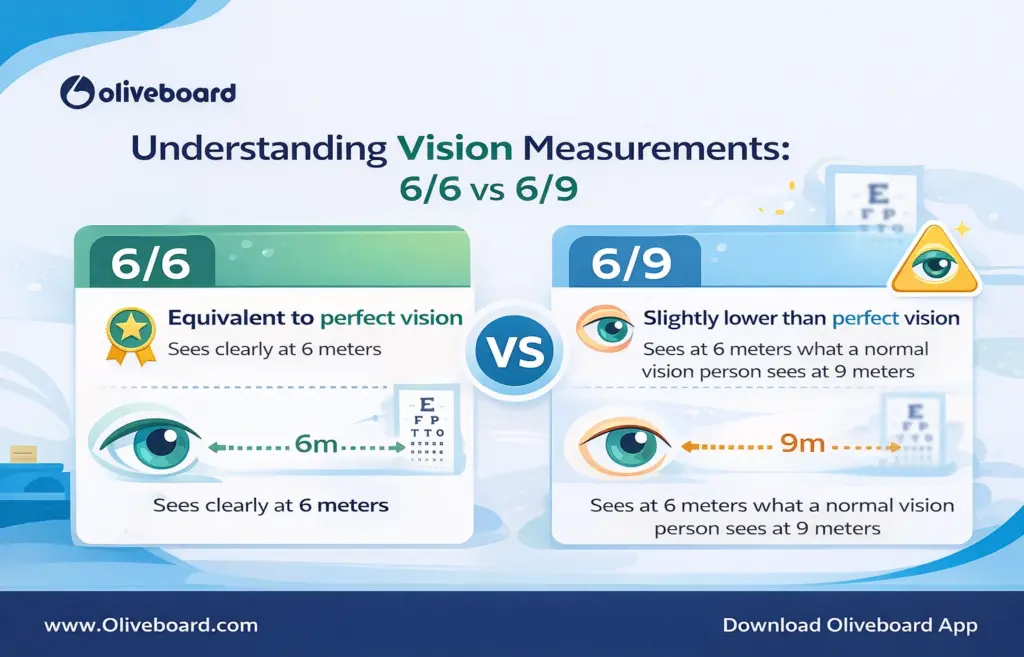
Before we dive into the standards, it’s important to decode what “6/6” and “6/9” actually represent. In countries using feet measurements, these correspond to 20/20 and 20/30 vision, respectively – but in India and many Commonwealth nations, the metric notation (meters) is common. So, 6/6 is better than 6/9.
What are the medical vision standards for RRB Technician Posts?
The medical vision standards vary from A-1, A-2, B-1, B-2, and more. Check out the details given below:
| Medical Standard | Distance Vision Requirement | Near Vision Requirement | Other Vision Conditions |
| A-1 | 6/6, 6/6 without glasses | Sn: 0.6, 0.6 | Must pass fogging, colour, binocular & night tests |
| A-2 | 6/9, 6/9 without glasses | Sn: 0.6, 0.6 | Must pass colour & binocular tests |
| A-3 | 6/9, 6/9 with/without glasses (max ±2D) | Sn: 0.6, 0.6 | Colour, binocular, night tests mandatory |
| B-1 | 6/9, 6/12 with/without glasses (max ±4D) | Sn: 0.6, 0.6 | Colour, binocular, night tests mandatory |
| B-2 | 6/9, 6/12 with/without glasses | Sn: 0.6, 0.6 | Binocular vision test required |
| C-1 | 6/12, 6/18 with/without glasses | Sn: 0.6, 0.6 | Basic visual ability |
Breakdown of the Standards
A complete breakdown of the distance and near vision is given below. Check them out:
Distance Vision
- 6/6 Vision: Perfect or normal visual acuity – no correction needed.
- 6/9 Vision: Slightly reduced visual sharpness. Still acceptable for many technical roles if corrected with glasses within allowable limits.
- 6/12 / 6/18 Vision: Moderate vision, allowed for less visually demanding roles.
These figures reflect your ability to see objects clearly at a given distance – critical for technicians who may need to read instruments, signals, and technical details from a distance.
Near Vision (Sn)
Near vision tests assess your ability to read and work accurately at close range, essential for technical tasks like wiring, circuit analysis, or instrument reading.
Glasses, Lenses, and Correction Limits for RRB Technician
Lenses are allowed but but only within specific power ranges depending on the category. Check out the details:
| Medical Standard | Max Allowed Lens Power |
| A-3 | ±2 Diopters |
| B-1 / B-2 | ±4 Diopters |
| Other Categories | Based on job requirement |
What are the other vision tests that should be qualified?
The other vision tests include the colour vision test, binocular vision test and more. The details are given below:
- Colour Vision Test – Identifies the ability to distinguish critical colours (important for signal reading and fault detection)
- Binocular Vision Test – Checks coordinated vision using both eyes
- Field of Vision and Night Vision Tests – Ensures peripheral vision and night adaptation are adequate for safety in low light
How can I prepare for the RRB Technician Medical Test 2026?
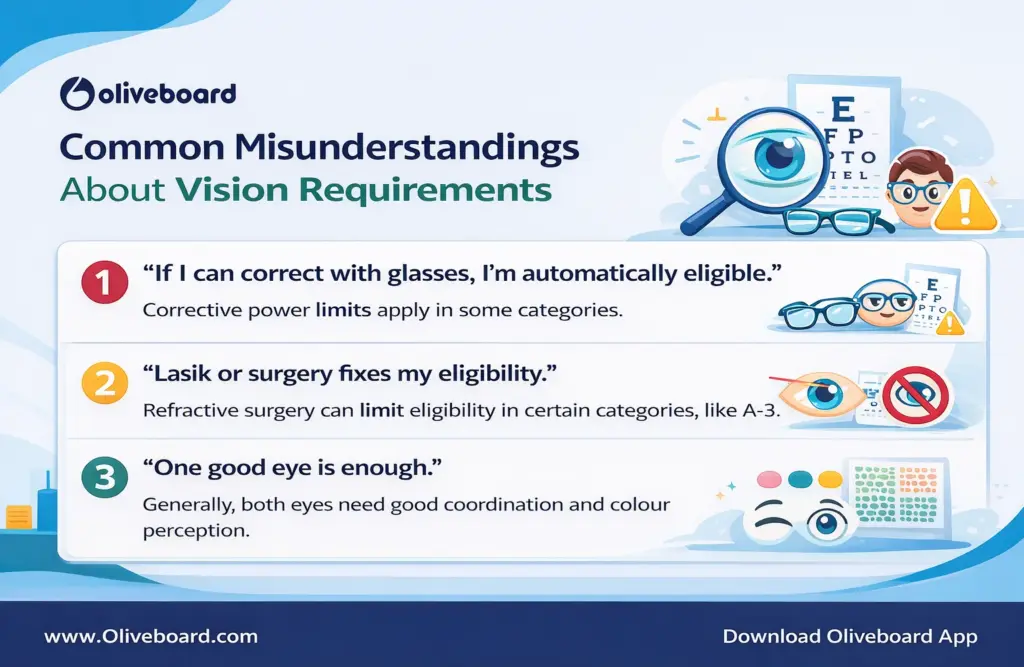
To prepare for the RRB Technician medical test 2026, candidates must get regular eye check-ups. Some of the other tips to be followed are given below:
- Understand your corrective lens limits for your targeted medical standard
- Practice colour vision and peripheral vision exercises
- Carry your latest ophthalmologist reports during the test
RRB Technician Medical Standard 2026 FAQs
The key medical standards include specific vision and hearing requirements, overall physical fitness, and stable mental health. Candidates must have a distant vision of 6/30 in one eye and 6/60 in the other, normal hearing ability, and no serious medical conditions that could affect job performance.
Authorized railway medical boards conduct the medical examination. It includes a physical assessment, vision and hearing tests, and a review of the candidate’s medical history.
If a candidate does not meet the RRB Technician Medical Qualification standards, they may be disqualified from the recruitment process and unable to proceed to the next stages of selection.
The medical examination will take place after candidates pass the written examination and are shortlisted for further evaluation. The exact schedule will be communicated by the Railway Recruitment Board.
Yes, candidates who fail the medical examination can appeal the decision. They need to follow the guidelines provided by the RRB for the appeal process, which may include submitting relevant medical documents or undergoing a re-examination.
- RRB Technician City Intimation Slip 2026, Check Exam City
- RRB Technician Grade 3 Chemistry Syllabus, Check Topics
- RRB Technician Grade 3 Mathematics Syllabus, Check Exam Pattern
- RRB Technician Maths Questions, Attempt Live Quiz & Download PDF
- General Science Study Notes for Railway RRB Exams – Vitamins
- RRB Technician Total Form Fill-Up 2026, Check Grade 1 & 3 Data

Hello! This is Arijit Dutta. I am a skilled Content Writer at Oliveboard with nearly 3+ years of experience in crafting engaging, informative, and exam-focused content for the Railways Domain. With a strong command of language and a keen understanding of learner needs, I contribute significantly to Oliveboard’s mission of delivering high-quality educational resources. Passionate about clear communication and continuous learning, I consistently create content that helps government job aspirants achieve their goals. Outside of work, I enjoy playing cricket and listening to music, which helps me stay balanced and creative in my professional journey.