
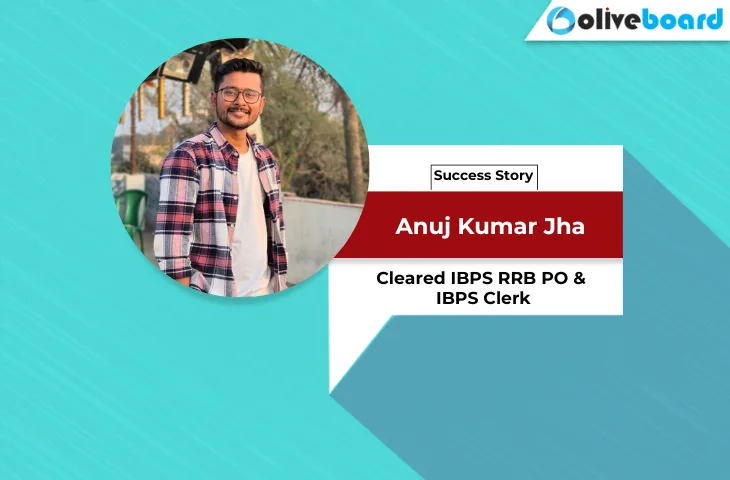
Most aspirants preparing for banking exams focus on covering the syllabus. But very few manage to combine clarity, consistent practice, and smart exam strategy in the right way. Anuj Kumar Jha did exactly that and the results were remarkable. Here’s the story of how Anuj secured Rank 1 in Meghalaya in both IBPS RRB PO and IBPS Clerk.
His preparation was not based on extreme study hours or complicated strategies. Instead, it revolved around building strong fundamentals, practicing regularly, and learning from mock tests and analysis.
Step 1: Start With a Clear Understanding of the Exam
Before beginning intensive preparation, Anuj focused on understanding the exam pattern and syllabus in detail. Instead of immediately solving questions, he first looked at previous year papers and exam trends to understand the difficulty level and the types of questions that usually appear.
During this phase, he referred to Oliveboard previous year question papers and exam analysis resources, which helped him get a clear picture of the exam.
Before preparing seriously, I wanted to understand the exam pattern clearly. Once you know what the exam expects, preparation becomes much more focused.
Step 2: Build Strong Fundamentals in Quant
For Quantitative Aptitude, his approach was to focus on fundamentals first. Instead of jumping directly into complex problems, Anuj worked on building conceptual clarity through structured lessons and practice questions.
To strengthen his concepts, he followed concept videos and practice sessions available on Oliveboard and then regularly solved practice questions. Once his basics were clear, he increased the number of questions he practiced daily. This helped him gradually improve both speed and accuracy.
Step 3: Make Reasoning Puzzles a Daily Habit
The Reasoning Ability section is often dominated by puzzles and seating arrangement questions, which can be time-consuming. In the beginning, puzzles were challenging for him as well. However, instead of avoiding them, Anuj made them a regular part of his daily preparation.
He practiced a wide variety of puzzles and reasoning questions through sectional practice sets available on Oliveboard. Gradually, puzzles became one of his stronger areas in the exam.
In the beginning, puzzles used to take a lot of time. But when you practice them regularly, you start recognizing patterns and solving them faster.
Step 4: Improve English Through Practice and Reading
For the English Language section, his strategy focused on improving comprehension rather than memorizing too many rules. Anuj practiced reading comprehension, cloze tests, and vocabulary exercises regularly. Much of this practice came from sectional tests and English practice sets on Oliveboard.
Consistent practice helped him become more comfortable with passages and improved his ability to quickly understand the context of questions during the exam.
Step 5: Use Mock Tests to Improve Performance
Mock tests played a crucial role in his preparation journey. Instead of attempting them just to check his score, Anuj treated them as a learning tool.
He regularly attempted full-length mock tests on Oliveboard, which helped him experience the real exam environment and identify areas where he needed improvement.
After every mock test, he carefully analyzed his performance—looking at mistakes, time-consuming questions, and weak areas. This process of testing and analyzing helped him steadily improve his performance.
A mock test is only useful if you analyze it properly. That’s where you actually learn and improve.
Step 6: Develop Time Management Skills
Another important skill Anuj developed through regular mock practice was time management.
By attempting timed mock tests and sectional tests on Oliveboard, he learned how to distribute time across sections, which questions to attempt first, and when to skip difficult ones.
Practicing under exam-like conditions helped him stay calm and focused during the actual exam.
Step 7: Stay Consistent and Keep Preparation Simple
One of the biggest lessons from his journey was the importance of keeping preparation simple.
Instead of constantly switching between multiple study materials, Anuj relied on a structured preparation approach using concept classes, practice questions, and mock tests from Oliveboard.
Consistency matters more than the number of resources you use.
Key Takeaways From His Strategy
His success was not based on a single shortcut or trick. It came from a combination of:
- Clear understanding of the exam pattern
- Strong conceptual fundamentals
- Regular puzzle and question practice
- Consistent mock test analysis
- Effective time management
By following this disciplined approach, he was able to secure Rank 1 in Meghalaya in both IBPS RRB PO and IBPS Clerk.
For aspirants preparing for banking exams like IBPS RRB PO, practicing with structured resources can make a huge difference. Platforms like Oliveboard provide concept classes, previous year papers, sectional tests, and full-length mock tests, helping candidates build concepts, practice effectively, and track their progress throughout preparation.

I started my journey with storytelling and journalism, and somewhere along the way, I discovered how much I truly love writing. Words have always been my way of connecting with people.
With 4+ years of experience in content creation, social media, and video storytelling, I focus on building meaningful conversations, not just posts. I enjoy understanding audiences, planning engaging content, and turning followers into active, connected communities.
At Oliveboard, I work on creating value-driven content that informs, engages, and brings people together.