
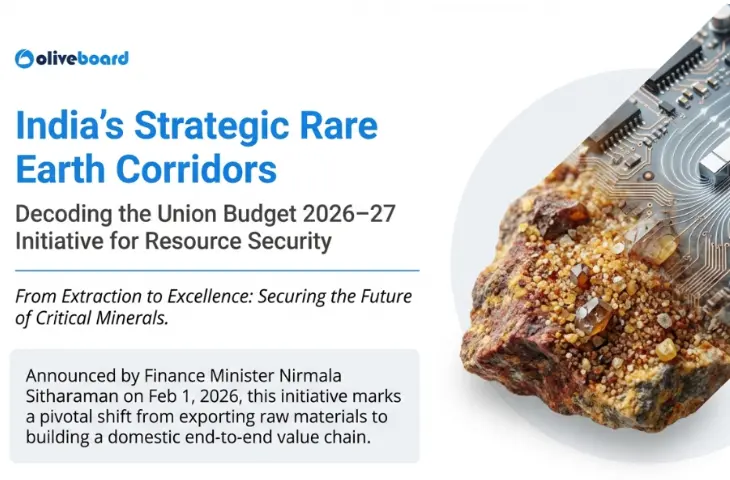
The Union Budget 2026–27, presented on 1 February 2026 by Finance Minister Nirmala Sitharaman, marked an important shift in India’s critical minerals strategy with the announcement of dedicated rare earth corridors. Building on the Scheme for Rare Earth Permanent Magnets launched in November 2025, the government proposed focused support for mineral-rich states to develop an integrated ecosystem for mining, processing, research, and manufacturing of rare earth elements.
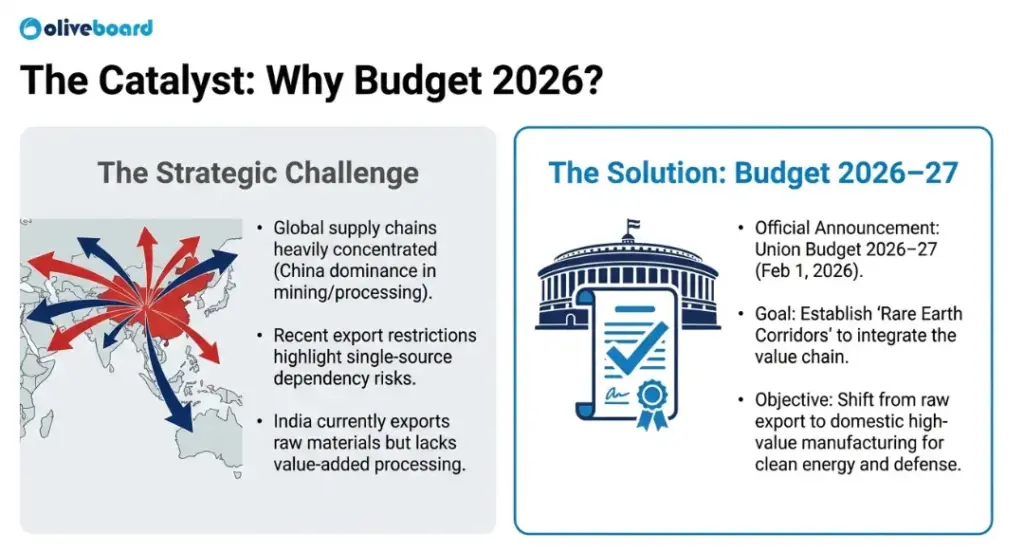
The announcement reflects India’s growing recognition that rare earth elements are central to future technologies such as electric vehicles, renewable energy systems, electronics, and defense manufacturing. With global supply chains heavily concentrated in a few countries, the Budget 2026 initiative aims to strengthen domestic capabilities and reduce strategic import dependence.
What are Rare Earth Corridors?
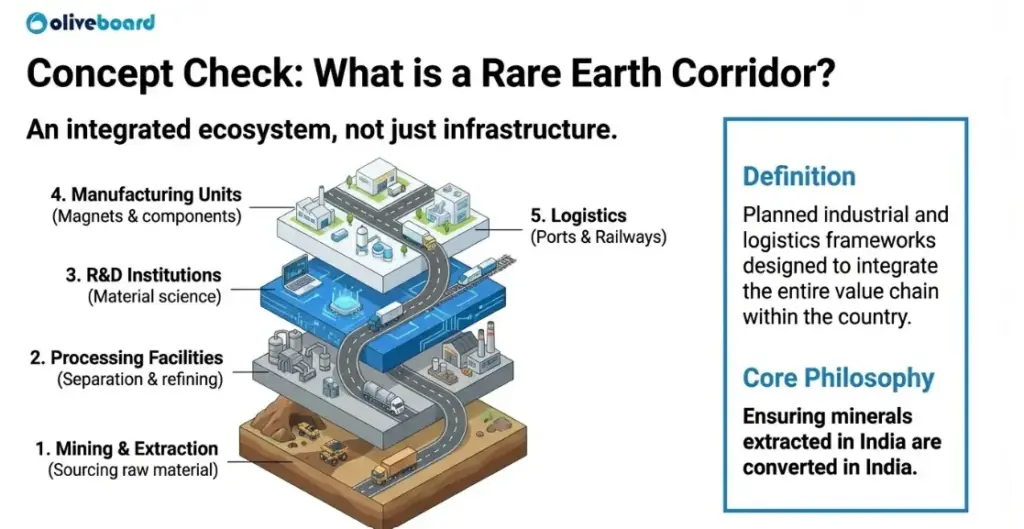
Rare earth corridors are planned industrial and logistics frameworks designed to integrate the entire rare earth value chain within the country. These corridors go beyond physical transport links and function as coordinated industrial ecosystems.
The core idea is to ensure that rare earth minerals extracted in India are processed and converted into high-value products domestically rather than being exported as raw materials. The corridors are expected to integrate the following components:
- mining and extraction sites
- processing and separation facilities
- research and development institutions
- manufacturing units for magnets and advanced components
- ports, railways and industrial logistics infrastructure
Why are Rare Earth Elements important?
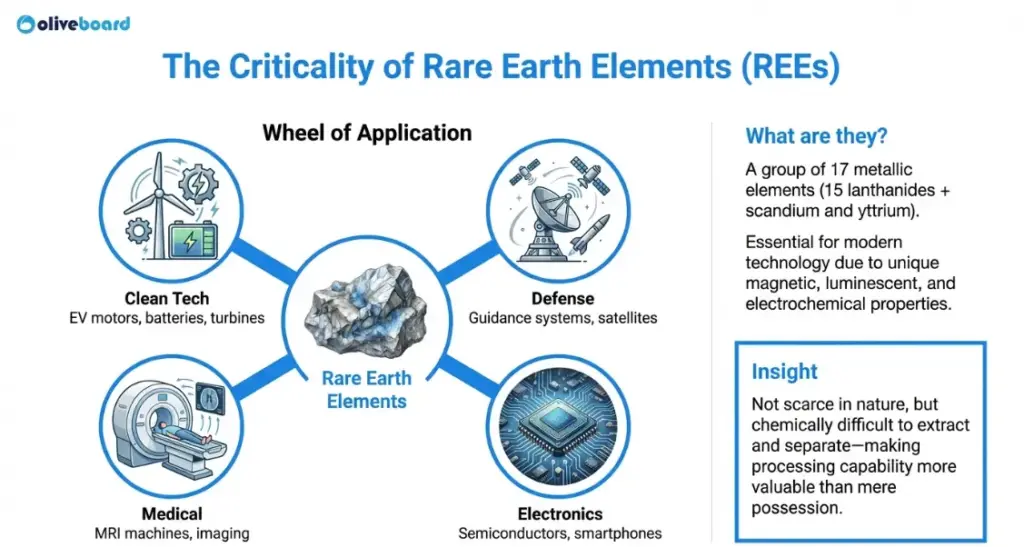
Rare earth elements are a group of 17 metallic elements that include the 15 lanthanides along with scandium and yttrium. Although they are not scarce in nature, they are difficult to extract and separate due to their chemical properties.
- electric vehicle motors and batteries
- wind turbines and renewable energy systems
- permanent magnets for high-efficiency machinery
- smartphones, semiconductors and consumer electronics
- defence systems, satellites and missile guidance
- medical equipment such as MRI machines
Why were rare earth corridors announced in Budget 2026?
The proposal for rare earth corridors aligns with the broader priorities of the Union Budget 2026–27, which emphasize domestic manufacturing, energy security, and long-term economic resilience. Globally, rare earth supply chains are dominated by China, which controls a large share of mining, processing, and magnet manufacturing capacity. Through the corridor initiative, the government aims to:
- reduce strategic import dependence
- secure critical inputs for clean energy and defence sectors
- strengthen domestic manufacturing competitiveness
- encourage private investment and international partnerships
Which states have been selected for rare earth corridors and why?
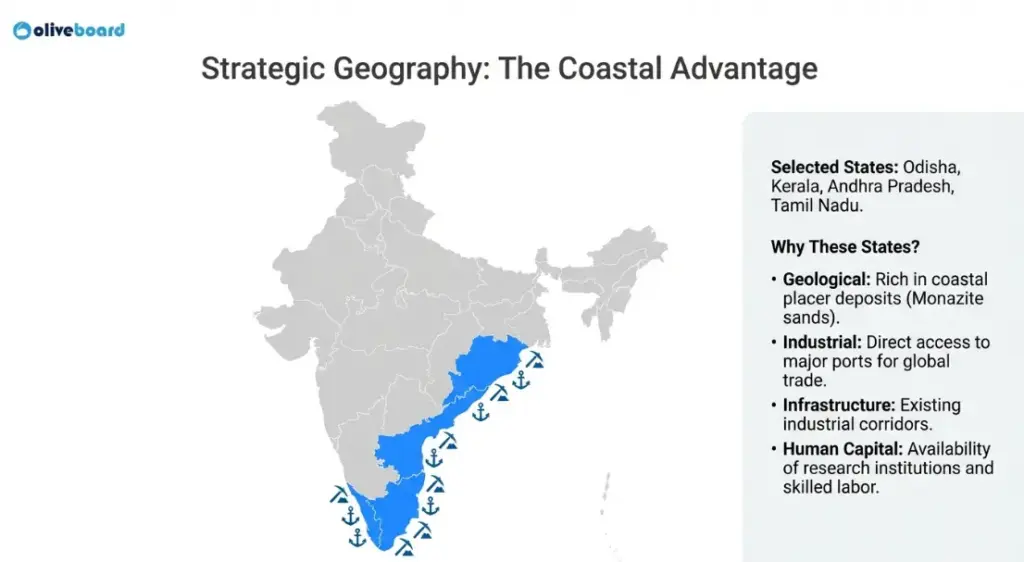
The government has identified Odisha, Kerala, Andhra Pradesh, and Tamil Nadu for the establishment of dedicated rare earth corridors. These states have been selected based on both geological availability and industrial readiness. India’s rare earth resources are largely concentrated in coastal placer deposits, particularly monazite sands, which are found in these regions. The selection of these states is based on the following factors:
- presence of rare earth–bearing mineral deposits
- access to major ports for logistics and trade
- existing industrial corridors and manufacturing clusters
- availability of skilled manpower and research institutions
- prior experience in mineral processing and heavy industries
How will rare earth corridors function?
The corridor-based approach seeks to address a key weakness in India’s rare earth sector, namely the lack of integration between mining, processing, and manufacturing. By aligning these activities geographically and institutionally, the government aims to improve efficiency, reduce costs, and ensure a stable supply of materials for domestic industries. The functioning of rare earth corridors will focus on:
- linking mining output directly with processing units
- expanding separation and refining capacity
- supporting research in material science and metallurgy
- enabling industrial-scale production of magnets and components
- reducing logistical delays and supply chain bottlenecks
Link with the Rare Earth Permanent Magnet Scheme
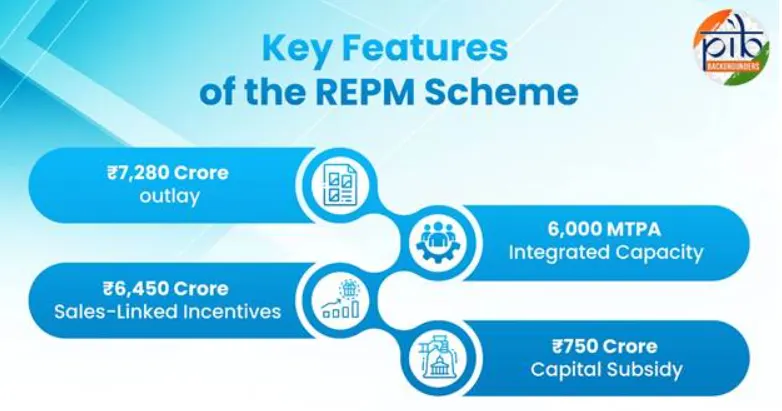
The rare earth corridor initiative builds directly on the Scheme to Promote Manufacturing of Sintered Rare Earth Permanent Magnets (REPM) launched in November 2025. That scheme was designed to create domestic capacity for producing magnets critical to electric vehicles, renewable energy, and electronics. Key features of the magnet manufacturing scheme include:
- a total outlay of ₹7,280 crore
- a target capacity of 6,000 metric tonnes per annum
- sales-linked incentives over a five-year period
- capital subsidies for setting up manufacturing facilities
Rare earth elements in India: resource base and current status
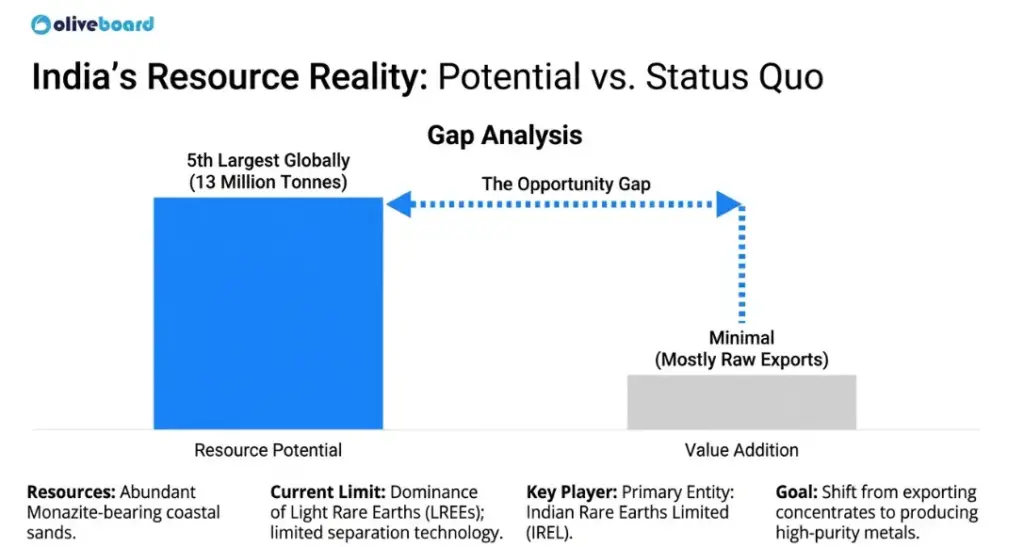
India possesses the fifth-largest rare earth resource base in the world, primarily in the form of monazite-bearing sands found along its coastline. Despite this resource advantage, India’s rare earth sector has historically been limited to extraction and partial processing, with minimal value addition. The current status of rare earth elements in India can be summarized as follows:
- around 13 million tonnes of estimated rare earth resources
- dominance of light rare earth elements
- extraction of neodymium and praseodymium at high purity levels
- Indian Rare Earths Limited as the primary public sector entity
- limited industrial-scale alloy and magnet manufacturing capacity
Environmental and strategic concerns of Rare Earth Corridors
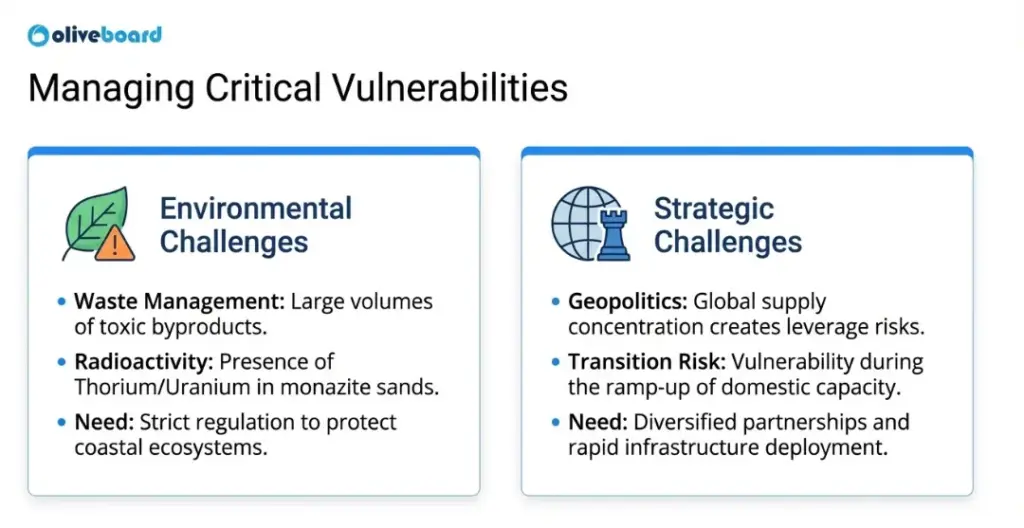
While rare earth elements are essential for clean and advanced technologies, their extraction and processing raise significant environmental and strategic concerns. Rare earth mining generates large volumes of waste and often involves radioactive elements such as thorium and uranium, posing risks to ecosystems and human health if not properly managed. The key concerns associated with rare earth elements include:
- generation of toxic and radioactive waste
- environmental degradation of mining regions
- health risks to workers and nearby communities
- strategic vulnerability due to global supply concentration
- geopolitical leverage exercised by dominant producers
How do rare earth corridors fit into India’s broader budget strategy?
The rare earth corridor initiative complements several other measures announced in the Union Budget 2026–27 aimed at strengthening India’s advanced manufacturing ecosystem. Major budget announcements related to this broader strategy include:
- increased allocation for the India Semiconductor Mission
- support for electronics components manufacturing
- creation of high-tech tool rooms for precision manufacturing
Long-term significance of rare earth corridors for India
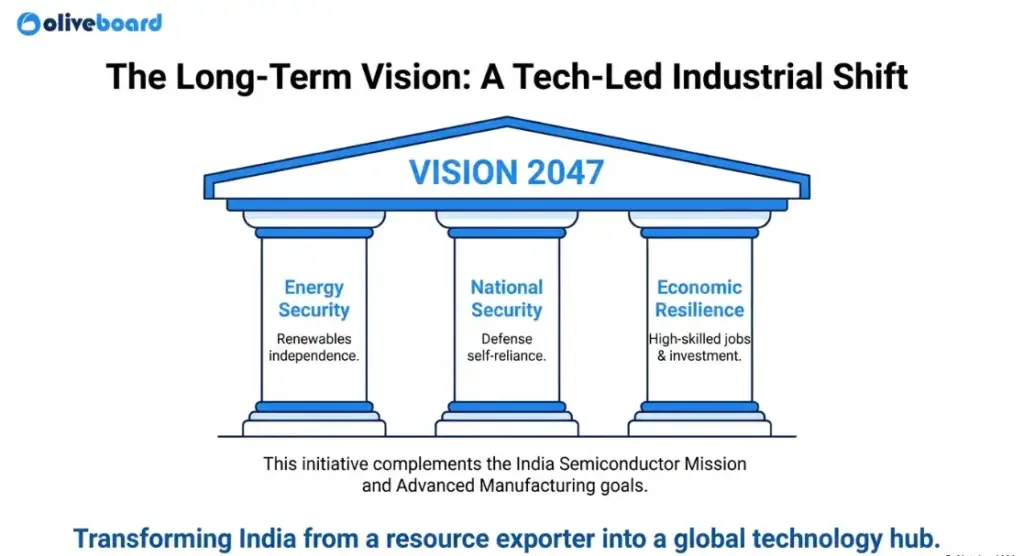
Over the long term, rare earth corridors have the potential to transform India’s position in global supply chains by enabling value addition and technological capability. If implemented effectively, the corridor approach can:
- reduce dependence on critical mineral imports
- support electric mobility and renewable energy goals
- generate high-skilled employment
- attract foreign investment and technology partnerships
- enhance economic resilience and national security
FAQs
Q1: What are rare earth corridors?
A1: Rare earth corridors are integrated industrial ecosystems that connect the mining, processing, research, and manufacturing of rare earth elements within India.
Q2: Which states are included in the rare earth corridor plan?
A2: Odisha, Kerala, Andhra Pradesh, and Tamil Nadu have been selected for developing dedicated rare earth corridors.
Q3: Why were rare earth corridors announced in Budget 2026?
A3: They were announced to reduce import dependence, secure critical mineral supply chains, and strengthen domestic manufacturing.
Q4: How are rare earth corridors linked to electric vehicles and clean energy?
A4: Rare earth permanent magnets are essential for electric vehicle motors, wind turbines, and renewable energy technologies.
Q5: Does India have sufficient rare earth resources?
A5: Yes, India has the fifth-largest rare earth resource base globally, mainly in monazite sands.
Q6: Who dominates the global rare earth supply chain?
A6: China currently dominates rare earth mining, processing, and magnet manufacturing worldwide.
- Arithmetic Questions for SBI PO Exam, LIVE Quiz & Free PDF
- Word Swap Questions for SBI PO Exam, LIVE Quiz & FREE PDF
- Idioms and Phrases for SBI PO, Live Quiz & FREE PDF
- Caselet DI Questions for SBI PO Exam, FREE Quiz and PDF
- Error Detection Questions for SBI PO, FREE Quiz & PDF

Hi, I’m Tripti, a senior content writer at Oliveboard, where I manage blog content along with community engagement across platforms like Telegram and WhatsApp. With 3+ years of experience in content and SEO optimization related to banking exams, I have led content for popular exams like SSC, banking, railway, and state exams.