
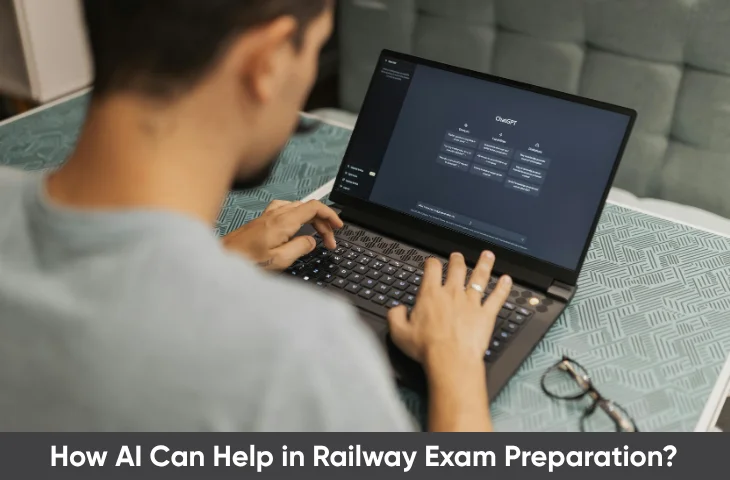
Railway Exam Preparation: In the age of digital transformation, preparing for competitive examinations like those conducted by the Railway Recruitment Board (RRB) is no longer just about books, pens and coaching centres. The integration of artificial intelligence (AI) is reshaping how aspirants approach their study strategy. This article explores how AI can enhance Railway Exam Preparation – especially for exams like Group D, NTPC and other railway recruitments – by providing personalised support, adaptive tools, intelligent insights and more.
Why AI Matters for Railway Exam Preparation?
Railway exams typically involve multiple sections (General Intelligence & Reasoning, General Awareness, Mathematics, Technical/Trade knowledge) and large volumes of syllabus. Time is limited, competition is intense. This is where AI steps in to enhance efficiency, accuracy and outcomes.
Personalisation at Scale
AI platforms analyse your past performance, strengths, weaknesses and learning pace. They then create a tailored study plan that prioritises topics where you are weak and adjusts difficulty based on your progress. Research in higher-education contexts found that AI-based preparation tools significantly improve performance and time management.
For Railway exam preparation, that means you don’t spend equal time on every topic-your learning path becomes smartly optimised.
Adaptive Testing & Real-Time Feedback
AI tools can generate practice quizzes and mock tests aligned with RRB exam patterns, adjusting difficulty dynamically. For example: if you fare well in Reasoning, the system presents harder questions; if you struggle in Mathematics, it presents targeted drills.
Instant feedback means you identify mistakes early, review the topic immediately and avoid repeating errors.
Efficient Revision & Time-Management
Revision is critical in Railway exam preparation: large syllabus + limited time = stress. AI can summarise large chunks of text, create flashcards, generate mind-maps and visualisations, freeing up time for active practice.
By optimising your study sessions, AI helps you focus where it counts most.
How AI tools Can Be Integrated into your Railway Study Routine?
Given below are some key areas where AI adds value and practical ways to use them for railway exam preparation:
Study-Plan & Scheduling
- Use an AI tool to input your exam date (e.g., RRB Group D CBT 1).
- The tool analyses your available study days, your current level (self-assessment), and generates a daily/weekly schedule.
- It sends reminders, monitors adherence, and re-adjusts if you fall behind.
- Benefit: You move from “I’ll study when I can” to “I’ll follow a data-driven schedule”.
Adaptive Practice and Mock Exams
The following table summarises how AI practice supports your prep:
| Area | AI – Enabled Support | Value for Railway Exam Preparation |
| Question generation | AI creates topic-wise questions (Reasoning, Maths, GK) | Mirrors RRB patterns; more variety |
| Difficulty adjustment | System analyses your accuracy, presents harder/easier items | Keeps you challenged yet not demoralised |
| Exam simulation | Timed full-length mocks, real-life interface | Builds stamina; reduces exam-day shocks |
| Analytics & feedback | Detailed reports: weak topics, time-spent per question, error types | Lets you refine your focus areas |
Content Curation and Revision Support
- Upload your notes or syllabus and let an AI summariser produce condensed revision sheets (big help for heavy GK/Current Affairs).
- Use AI to convert text into mind-maps, flashcards or voice notes, perfect for last-minute revising on the go.
- Doubt-solving chatbots: Instead of waiting for a tutor, type your question and get explanations (in English/Hindi) tailored to your level.
This flexibility—especially helpful for aspirants from cities like Durgapur or areas with fewer coaching resources—makes study accessibly anywhere, anytime.
Advantages and Practical Benefits of Using AI
Let’s list the top benefits and how they apply directly to Railway exam aspirants. Given below are the details:
- Personalised learning path: Focus on what you need most, rather than generic schedules.
- Better time utilisation: Less time wasted on topics you already know well; more time for improvement.
- Higher practice volume: AI can rapidly generate many questions and mock tests, increasing your exposure.
- Reduced stress and improved confidence: With regular feedback and consistent progression, anxiety goes down.
- 24/7 availability: Especially useful for aspirants balancing job, LAN shift or part-time studies.
- Integrated revision tools: Mind maps, flashcards, audio summaries – good for commutes or quick revision breaks.
Challenges & Things to Watch Out
AI is powerful, but it’s not a silver bullet. Being aware of limitations makes your preparation smarter.
- Over-reliance on AI: If you depend entirely on AI, you may miss exercising your own analytical ability—critical in reasoning sections.
- Quality of AI-generated content: Not all tools are accurate or aligned with RRB syllabus; verify sources and cross-check.
- Lack of human mentoring: AI can’t replace human mentors entirely—especially for motivational and career guidance aspects.
- Accessibility & cost: Some premium AI tools may be costly or require good internet connectivity—a hurdle for aspirants in remote zones.
- Ethical & exam-policy considerations: Ensure that using AI tools is permitted by your exam rules and maintain academic integrity.
How you Should Embed AI into Railway Exam Preparation Plan?
Follow a structured three-stage integration:
| Stage | Phase Title | Key Activities | AI Integration & Purpose |
| Stage 1 | Setup & Baseline Assessment | – Choose an AI tool/platform (free or premium) that supports syllabus upload, analytics, and mock tests.- Input personal profile: study hours per day, current preparation level, exam date.- Take a baseline mock test to identify strengths and weaknesses. | – AI analyzes initial data to map strong and weak areas.- Generates a personalized study plan based on input and baseline performance. |
| Stage 2 | Regular Practice & Monitoring | – Follow AI-generated study schedule consistently.- Set weekly goals (e.g., “Complete all GK flashcards by Sunday”).- Attempt mocks every fortnight or month to monitor progress.- Maintain an error log to record mistakes and patterns. | – AI tracks progress and adjusts focus areas.- Detects recurring weaknesses (e.g., poor in Series/Analogy reasoning).- Suggests topic-wise improvements and adaptive tests. |
| Stage 3 | Final Revision & Simulation | – In the last 2–3 weeks, use AI tools for summary sheets, quick audio/flash notes, and full-length mock simulations.- Focus on time-per-question and speed management.- Identify probable high-yield topics based on past exam data. | – AI assists with revision optimization and realistic exam simulations.- Highlights time management issues.- Predicts high-scoring topics for final preparation boost. |
Summary
Check out the main points summarizing the article:
- AI tools bring personalisation, adaptive practice, efficient revision and real-time feedback into Railway exam preparation—making your study smarter and more effective.
- For exams like RRB Group D, NTPC or other posts, AI helps you manage vast syllabus (Reasoning, Maths, GK, Technical) and tight time frames.
- The best way is to combine AI tools with traditional study methods—books, coaching, peer discussion—rather than treat AI as a total replacement.
- Awareness of pitfalls (over-dependence, content alignment, access) ensures you use AI wisely.
- Embed AI into your plan as a study coach and analytics partner, not just a “tool to give answers”. This shifts your prep from “hard work” to “smart work”.
In today’s competitive railway recruitment environment, aspirants can no longer rely purely on rote study and generic coaching. Integrating AI into your Railway Exam Preparation gives you a critical edge – by tailoring your learning, sharpening your practice, optimizing your time and tracking your progress.
FAQs
AI can enhance Railway Exam Preparation by providing personalized learning paths, instant doubt resolution, and smart analytics. It tracks a student’s progress, identifies weak areas, and recommends targeted practice questions or mock tests to improve efficiency and exam readiness.
Yes, most reputed AI-driven platforms use real exam data, adaptive algorithms, and expert-verified content. They mimic the RRB NTPC, ALP, Group D, and Technician exam patterns closely, ensuring authentic preparation aligned with the official syllabus.
Some popular AI-powered tools and platforms include:
ChatGPT / GPT-based assistants for concept explanation and doubt solving
AI-based mock test analyzers
Adaptive learning apps that adjust question difficulty in real-time
AI flashcard creators for memorizing General Science and GK topics
Absolutely. AI tools can track performance and timing patterns in mock tests, highlight where time is being wasted, and suggest strategies for improvement. This helps aspirants balance speed and accuracy – crucial for clearing competitive exams like RRB NTPC or Group D.
Not entirely. AI acts as a supplement, not a substitute. While traditional coaching provides human guidance and mentorship, AI enhances learning with data-driven insights, adaptive quizzes, and personalised feedback – making the overall preparation smarter and more effective.

Hello! This is Arijit Dutta. I am a skilled Content Writer at Oliveboard with nearly 3+ years of experience in crafting engaging, informative, and exam-focused content for the Railways Domain. With a strong command of language and a keen understanding of learner needs, I contribute significantly to Oliveboard’s mission of delivering high-quality educational resources. Passionate about clear communication and continuous learning, I consistently create content that helps government job aspirants achieve their goals. Outside of work, I enjoy playing cricket and listening to music, which helps me stay balanced and creative in my professional journey.