
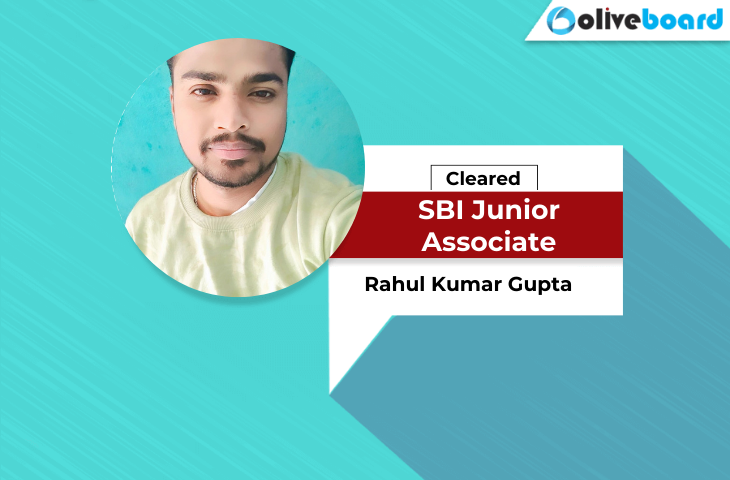
Clearing SBI Junior Associate (Clerk) requires patience, consistency, and the ability to handle repeated setbacks. The success story of Rahul Kumar Gupta in the SBI JA exam highlights how regular practice, mock tests, and strong revision can finally lead to success, even after multiple close failures.
Rahul Kumar Gupta’s Success Story: Cleared SBI JA
The success story of Rahul Kumar Gupta in the SBI JA exam clearly shows that repeated failures do not mean the end. With consistent mock practice, revision, and discipline, success is only a matter of time.
Q1. When did you start preparing for bank exams?
A: I started preparing after my postgraduation. I have an MSc in Botany, and my journey has been from science to banking. The transition wasn’t easy, but I stayed consistent.
Q2. Did you face failures during your preparation?
A: Yes, many times. I missed RRB PO final selection by just 1 mark and failed IBPS PO mains by 3 marks. These failures were difficult, but they taught me where I needed improvement. Eventually, I cleared SBI Junior Associate.
Q3. What was the core of your daily preparation routine?
A: My preparation mainly revolved around classes, DPPs, and daily sectional mock tests. Regular practice was the key. I focused more on solving questions than just watching lectures.
Q4. How important were mock tests in your preparation?
A: Mock tests played a very important role. I tried many mock test platforms, but I personally recommend Oliveboard for bank exams. Their mocks have a mix of easy, moderate, and difficult questions, which is very close to the real exam level.
Q5. How should mock tests be used effectively?
A: Giving mocks alone is not enough. You must analyze each mock with full concentration. Analysis helps you understand mistakes, weak areas, and time management issues.
Q6. What strategy did you follow for Reasoning and Quant?
A: I regularly practiced DPPs and sectional mocks. Sectional practice helps in building speed and accuracy and makes you comfortable with exam pressure.
Q7. How did you prepare for English Language?
A: I focused on editorials and practice. Reading editorials daily and solving sectional mocks helped improve comprehension and accuracy.
Q8. How did you prepare for General Awareness?
A: There is no alternative to daily study for GA. I followed daily current affairs, revised through weekly magazines, and attempted quizzes regularly. Consistency is very important in GA.
Q9. What helped you stay motivated despite repeated failures?
A: I accepted failures as part of the process. I focused on improving my preparation instead of worrying about results. Staying disciplined and continuing practice helped me move forward.
Q10. What is your key advice for SBI JA aspirants?
A: Give as many mocks as possible and analyze them properly. Stay consistent with daily practice, especially in GA. Even if results are delayed, don’t stop preparing.
FAQs
Q1. How important are mock tests for SBI Junior Associate preparation?
Mock tests are extremely important. They help improve speed, accuracy, and exam temperament. However, proper mock analysis is the most crucial part.
Q2. Is daily sectional practice necessary for SBI JA?
Yes, daily sectional practice helps strengthen individual subjects and improves time management for the actual exam.
Q3. How should General Awareness be prepared for SBI JA?
General Awareness should be studied daily. Weekly magazines and regular quizzes help in revision and better retention.
Q4. Can repeated failures still lead to selection in SBI exams?
Yes. Many candidates clear SBI exams after multiple close failures. Learning from mistakes and improving preparation makes the difference.
Q5. Which type of mock tests are best for SBI JA?
Mocks that include mixed difficulty levels—easy, moderate, and difficult—are best, as they closely reflect the real exam pattern.
- Nitin’s SSC CGL Success Story and His Preparation Strategy
- How Jagdish Kale Cleared SBI CBO While Working Full-Time
- Mr. Sarvesh Cleared CAIIB After 25 Years in Banking
- Success Story of Debdas Maity Who Cleared IBPS RRB PO
- Success Story of Ashutosh Shukla: Cleared IBPS RRB PO
- Sudip Dutta’s Inspiring Journey to Becoming a CGST Inspector

Hi, I’m Tripti, a senior content writer at Oliveboard, where I manage blog content along with community engagement across platforms like Telegram and WhatsApp. With 3+ years of experience in content and SEO optimization related to banking exams, I have led content for popular exams like SSC, banking, railway, and state exams.