
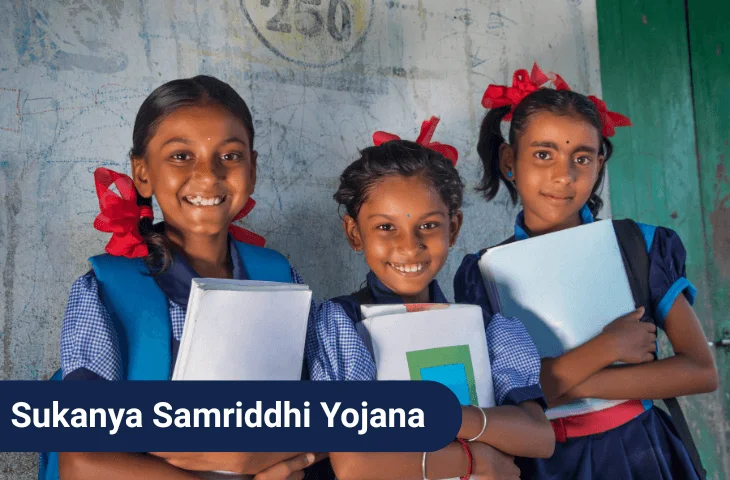
Sukanya Samriddhi Yojana (SSY) is a long-term savings scheme introduced by the Government of India on 22nd January 2015 under the Beti Bachao, Beti Padhao campaign. The primary goal of this scheme is to encourage parents and guardians to save for the education and marriage expenses of their girl child.
SSY is considered a secure and high-return investment because it is government-backed, offers tax-free interest, and follows the EEE (Exempt-Exempt-Exempt) tax structure, making it highly attractive for families and financial planners.
Who is Eligible to Open an SSY Account?
The eligibility criteria for opening an SSY account are simple yet specific:
- The account can be opened by a natural or legal guardian on behalf of the girl child.
- The girl child must be below the age of 10 years.
- Each girl child can have only one SSY account, while a family can open up to two accounts. Exceptions are made for twins or triplets.
- Non-Resident Indians (NRIs) are not eligible to open these accounts.
- Only a citizen of India can open an account.
What are the Key Features of Sukanya Samriddhi Yojana?
SSY comes with several features that make it an attractive investment for families:
| Feature | Details |
| Minimum Deposit | ₹250 per financial year |
| Maximum Deposit | ₹1.5 lakh per financial year |
| Deposit Multiples | Deposits can be made in multiples of ₹50 or ₹100 depending on the post office or bank |
| Deposit Frequency | No limit on the number of deposits in a month or financial year |
| Deposit Tenure | Contributions can be made for up to 15 years from the account opening date |
| Maturity Period | Account matures 21 years from the date of opening |
| Post-Tenure Interest | Even after 15-year deposit period ends, account continues to earn interest until maturity |
| Interest Rate | Determined and revised quarterly by the Government of India |
| Interest Compounding | Compounded annually and credited at the end of each financial year |
| Account Management | Managed by guardian until girl child turns 18; girl child takes control after 18 |
Also Check: List of Government Schemes of India
How are Withdrawals Allowed in SSY?
The SSY scheme provides flexibility for withdrawals under certain conditions:
| Category | Eligibility | Details |
| Partial Withdrawals | Age 18 or completion of 10th grade | Up to 50% of balance; lump sum or installments; 1 withdrawal per year for up to 5 years |
| Full Withdrawals | Marriage of the girl child | Allowed only after she turns 18 |
| Premature Closure | Death of account holder/guardian or compassionate grounds | Allowed with government authorization; not within first 5 years |
| General Notes | Applicable to all withdrawals | Ensures funds for education or marriage while safeguarding account integrity |
Check Out: Complete List of Important Schemes for NABARD Grade A Exam
What are the Tax Benefits of Sukanya Samriddhi Yojana?
One of the most attractive aspects of SSY is its tax benefits:
- Section 80C Deduction: Deposits qualify for deductions under Section 80C of the Income Tax Act.
- Exempt-Exempt-Exempt (EEE) Status:
- Deposits: Tax-exempt
- Interest Earned: Tax-free
- Maturity Proceeds: Tax-free
This triple tax exemption makes SSY an efficient investment tool for parents looking for long-term savings and wealth accumulation for their daughters.
How is Interest Calculated in SSY?
The interest on a Sukanya Samriddhi Yojana (SSY) account is calculated monthly based on the lowest balance between the close of the 5th day and the end of the month. At the end of each financial year, this interest is compounded annually and credited to the account, allowing the savings to grow steadily over time.
Additionally, the Government of India revises the interest rate quarterly, ensuring that the scheme remains competitive and attractive compared to other savings instruments.
Get ready to crack government job exams with leading educators
What Happens Upon Maturity of SSY Account?
SSY ensures that families have a substantial corpus available for important life milestones of the girl child.
- The SSY account matures 21 years from the date of opening.
- If the girl child marries after 18, the account can be closed early for this purpose.
- The matured amount is tax-free, and the girl child can use it for higher education, business, or personal expenses.
How can SSY Accounts be Transferred?
SSY accounts are fully transferable from one bank or post office to another anywhere in India. This feature ensures continuity of benefits for the account holder, even if the family relocates to a different city or state, allowing uninterrupted growth of the savings.
Why is Sukanya Samriddhi Yojana Important for Financial Planning?
SSY is not just a savings scheme; it is a strategic financial tool.
- It promotes financial literacy and discipline among parents and guardians.
- Encourages long-term planning for education and marriage expenses.
- Provides high returns compared to traditional savings accounts or fixed deposits.
- Its EEE tax status ensures maximum wealth accumulation.
- Aligns with government initiatives promoting the welfare of the girl child, fostering gender equality and financial inclusion.
Key Takeaways
| Feature | Details |
| Eligibility | Girl child under 10 years, account opened by guardian |
| Minimum Deposit | ₹250 per year |
| Maximum Deposit | ₹1.5 lakh per year |
| Deposit Tenure | 15 years |
| Account Maturity | 21 years |
| Interest Rate | Quarterly revised, compounded annually |
| Tax Benefits | Section 80C deduction, EEE status |
| Partial Withdrawal | Up to 50% for higher education after 18 or 10th grade |
| Full Withdrawal | Allowed after 18 for marriage |
| Premature Closure | Allowed on death or life-threatening illness (government approved) |
| Account Limit per Family | Maximum two accounts per family, exception for twins/triplets |
| Transferability | Can be transferred across banks/post offices in India |
Questions Based on Sukanya Samriddhi Yojana
- When was Sukanya Samriddhi Yojana launched?
a) 15th August 2014
b) 22nd January 2015
c) 1st April 2016
d) 26th January 2015
e) 2nd October 2015 - What is the maximum annual deposit allowed under SSY?
a) ₹1 lakh
b) ₹2 lakh
c) ₹1.5 lakh
d) ₹50,000
e) ₹2.5 lakh - Who can open an SSY account?
a) Any Indian citizen
b) Parents or guardians of a girl child under 10
c) Only government officials
d) NRIs
e) Anyone above 18 - What is the maturity period of SSY?
a) 15 years
b) 18 years
c) 21 years
d) 25 years
e) 20 years - At what age can partial withdrawals be made from SSY for higher education?
a) 16
b) 17
c) 18
d) 20
e) 15 - SSY enjoys which type of tax status?
a) Taxable-Taxable-Taxable
b) Exempt-Taxable-Exempt
c) Exempt-Exempt-Exempt
d) Taxable-Exempt-Taxable
e) None - How many SSY accounts are allowed per family?
a) One
b) Two
c) Three
d) Unlimited
e) Four - Can SSY account be transferred to another branch?
a) Yes
b) No
c) Only within same city
d) Only after 5 years
e) Only after maturity - Can premature closure happen within first 5 years?
a) Yes
b) No
c) Only with court order
d) Only with interest penalty
e) Only for marriage - What is the minimum deposit required in SSY per year?
a) ₹100
b) ₹250
c) ₹500
d) ₹1000
e) ₹150
Also Read:
Answer Key
| Question No. | Correct Answer |
| 1 | b) 22nd January 2015 |
| 2 | c) ₹1.5 lakh |
| 3 | b) Parents or guardians of a girl child under 10 |
| 4 | c) 21 years |
| 5 | c) 18 |
| 6 | c) Exempt-Exempt-Exempt |
| 7 | b) Two |
| 8 | a) Yes |
| 9 | b) No |
| 10 | b) ₹250 |
- Rashtriya Vayoshri Yojana, Attempt Free Quiz and Download PDF
- Chief Minister Vayoshree Yojana, Attempt Free Quiz & Download PDF
- Attempt Quiz on NPS and APY Features, Benefits & Latest Updates
- Government Schemes for NABARD Grade A 2026
- Attempt Quiz on Rashtriya Gram Swaraj Abhiyan & Download PDF
- How Some Aspirants Clear Multiple Government Exams: Strategy, Discipline & Exam Psychology
Priti Palit, is an accomplished edtech writer with 4+ years of experience in Regulatory Exams and other multiple government exams. With a passion for education and a keen eye for detail, she has contributed significantly to the field of online learning. Priti’s expertise and dedication continue to empower aspiring individuals in their pursuit of success in government examinations.