

JAIIB previous year question papers are a useful resource for banking professionals preparing for the 2026 exam. Practising these papers helps candidates understand the exam pattern, identify important topics, improve accuracy, and manage time effectively during the 2-hour exam while balancing their work and study schedules.
JAIIB May 2026 Memory Based Papers, Download PDF
Candidates can download the IIBF JAIIB Memory-Based Question Papers for the May 2026 cycle through the direct link provided below and take their JAIIB November 2026 exam preparation to the next level.
| JAIIB Papers | Link to Download |
| JAIIB May 2026 AFM Paper | Download PDF |
| JAIIB May 2026 IE and IFS Paper | Download PDF |
| JAIIB May 2026 PPB Paper | Download PDF |
| JAIIB May 2026 RBWM Paper | Download PDF |
JAIIB November 2025 Memory Based PYPs, Download PDF
Candidates can download the IIBF JAIIB previous year question papers for the November 2025 cycle through the direct link provided below and take their JAIIB 2026 exam preparation to the next level.
| JAIIB Papers | Link to Download |
| JAIIB November 2025 AFM Paper | Download PDF |
| JAIIB November 2025 IE and IFS Paper | Download PDF |
| JAIIB November 2025 PPB Paper | Download PDF |
| JAIIB November 2025 RBWM Paper | Download PDF |
JAIIB May 2025 Memory Based PYPs, Download PDF
Candidates can download the IIBF JAIIB previous year question papers for the May 2025 cycle through the direct link provided below:
| JAIIB May Papers | Link to Download |
| JAIIB May 2025 AFM Paper | Download PDF |
| JAIIB May 2025 IE and IFS Paper | Download PDF |
| JAIIB May 2025 PPB Paper | Download PDF |
| JAIIB May 2025 RBWM Paper | Download PDF |
Attempt JAIIB Memory Based Paper MCQs
JAIIB Memory Based Paper MCQs are based on past exam trends to help candidates practice effectively. These questions cover key topics from all modules, providing a realistic exam experience.
Module: IE & IFS (Indian Economy & Indian Financial System)
Check out a few questions from JAIIB IE&IFS Paper and do not forget to check out JAIIB IE&IFS Preparation Strategy.
1. What is the primary objective of monetary policy in India?
2. What is the current base year for GDP calculation in India?
3. Which of the following is NOT a function of the Reserve Bank of India?
4. What does CRR stand for in banking?
5. Which financial market instrument is used for short-term borrowing by governments?
Quiz Summary

Sign Up
Or, register with email
 Email Id
 Mobile Number
 Password

Login
Email Id
Password
Forgot Password
Please enter the Email ID we will send you a Email with the link to reset the password.
Email Id
Or, login with

Module: PPB (Principles and Practices of Banking)
Check out a few questions from JAIIB PPB Paper and do not forget to check out JAIIB PPB Preparation Strategy.
1. Identify the incorrect statements:
I. Private Ltd restricts the right to transfer its shares but permit invitation to public to subscribe for any of its securities.
II. A subsidiary company of another company that is not a private company is deemed to be public company, even if registered as a private company.
III. A company in which fifty per cent or more of the shares are held by any one or more of the Central/ State Governments, including a subsidiary of such a company is called a Government Company.
2. Mr. Rajat, a farmer residing in a rural area, has his savings account in a bank branch that is being taken over by another bank. He wants to understand how the transfer will affect his account. What happens to the terms of the contract governing deposit accounts when a bank branch is taken over by another bank in rural and semiurban centers?
3. What is the procedure for handling shortages and excesses in cash balances at a bank branch?
4. Which of the following instruments is a negotiable instrument under the NI Act, 1881?
5. What does CASA stand for in banking?
Quiz Summary
Sign Up
Or, register with email
Email Id
Mobile Number
Password
Login
Email Id
Password
Forgot Password
Please enter the Email ID we will send you a Email with the link to reset the password.
Email Id
Or, login with
Module: AFM (Accounting & Financial Management for Bankers)
Check out a few questions from JAIIB AFM Paper and do not forget to check out JAIIB AFM Preparation Strategy.
1. Which financial statement shows the assets and liabilities of a company?
2. What is the accounting term for allocating the cost of tangible assets over their useful life?
3. In double-entry bookkeeping, which of the following is a debit entry?
4. What does the term “contingent liability” refer to?
5. The formula for calculating Return on Equity (ROE) is:
Quiz Summary
Sign Up
Or, register with email
Email Id
Mobile Number
Password
Login
Email Id
Password
Forgot Password
Please enter the Email ID we will send you a Email with the link to reset the password.
Email Id
Or, login with
Module: RBWM (Retail Banking & Wealth Management)
Check out a few questions from JAIIB RBWM Paper and do not forget to check out JAIIB RBWM Preparation Strategy.
1. What is the main feature of a term deposit?
2. What is the primary purpose of mutual funds?
3. As per Income Tax Act, repayment of FD proceeds:
1. Applies to the bank as a whole, not branch-wise.
2. Must be by A/c Payee cheque/draft/credit if maturity proceeds ≥ ₹20,000.
3. Applies to deposits held singly or jointly at a branch.
4. Cash repayment is allowed for amounts < ₹20,000.
Which are correct?
4. What is the tenure for the Public Provident Fund (PPF) account?
5. Which of the following statements are true?
1. Banks may allow loans up to 80–90% of FD value.
2. Interest charged on loan is higher than FD interest rate.
3. Advances against third-party deposits are encouraged by banks.
4. Advances against minors’ deposits jointly with guardians may be permitted.
Which are correct?
Quiz Summary
Sign Up
Or, register with email
Email Id
Mobile Number
Password
Login
Email Id
Password
Forgot Password
Please enter the Email ID we will send you a Email with the link to reset the password.
Email Id
Or, login with
Download JAIIB May 2024 past year paper free PDF
Professionals can download the IIBF JAIIB May-June 2024 papers through the direct link provided below:
| Paper | Download Link |
| JAIIB IE & IFS May 2024 Paper | Download Here |
| JAIIB PPB May 2024 Paper | Download Here |
| JAIIB AFM May 2024 Paper | Download Here |
| JAIIB RBWM May 2024 Paper | Download Here |
JAIIB October 2023 previous year paper PDF
Candidates can download the IIBF JAIIB previous year question papers for the October 2023 cycle through the direct link provided below:
| Paper Name | Download Link |
| JAIIB October 2023 IE and IFS Paper | Download PDF |
| JAIIB October 2023 PPB Paper | Download PDF |
| JAIIB October 2023 AFM Paper | Download PDF |
| JAIIB October 2023 RBWM Paper | Download PDF |
JAIIB May 2023 past year paper free PDF
Candidates can download the IIBF JAIIB previous year question papers for the May 2023 cycle through the direct link provided below:
| Paper Name | Download Link |
| JAIIB May 2023 IE and IFS Paper | Download PDF |
| JAIIB May 2023 PPB Paper | Download PDF |
| JAIIB May 2023 AFM Paper | Download PDF |
| JAIIB May 2023 RBWM Paper | Download PDF |
Which are the important topics for JAIIB IE and IFS based on previous year question paper analysis?
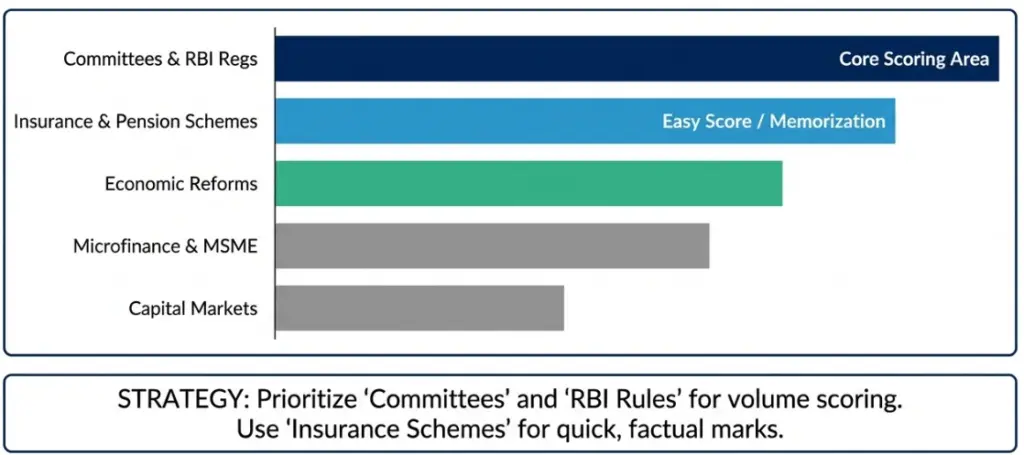
Preparing for the JAIIB IE & IFS exams requires focusing on most repeated topics, numericals, and case studies. The most repeated and scoring modules include Committees, RBI Regulations, Insurance & Pension Schemes, Economic Reforms, Microfinance/MSME, Finance, SDGs, and Numericals.
Which committees and banking reforms are frequently asked in IE and IFS papers?
Committees are very high-yield areas. Questions are usually about the committee’s name, sector focus, recommendations, and implementation impact.
| Committee / Topic | Key Focus | Exam Pointer |
| Narasimham Committee 1 and 2 | Banking reforms, NPAs, prudential norms, and LAF. | Focus on major banking reforms. |
| Malhotra Committee | Insurance reforms, IRDA, and private participation. | Revise key insurance reforms. |
| B Committee | MSME finance, development, and venture capital. | Remember major recommendations. |
| Dr. Krishna Swamy / MV Nair Committee | Priority Sector Lending (PSL) targets. | Focus on PSL recommendations. |
| Hilton Young Commission | Recommended the establishment of RBI. | Remember its role in RBI formation. |
| Other RBI Committees | Monetary policy, credit information, and financial institutions. | Revise key concepts and recommendations. |
Which RBI and banking regulation topics are most repeated in IE and IFS past papers?
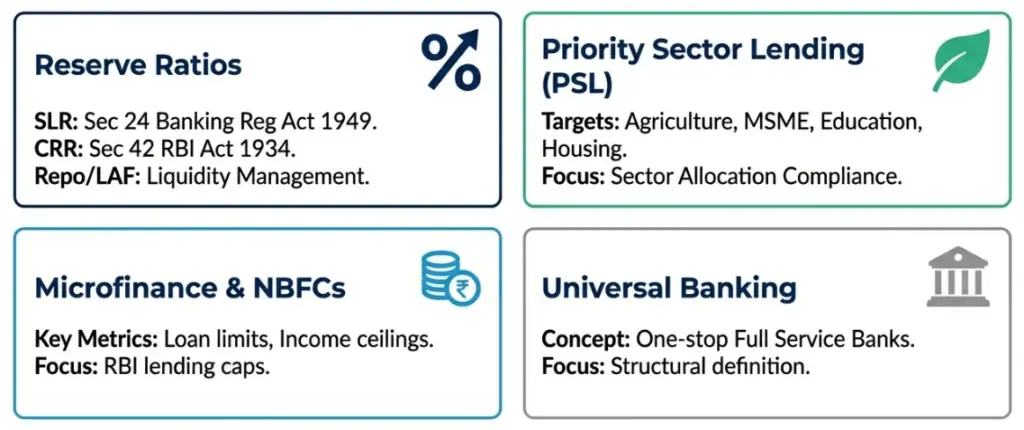
RBI regulations and banking rules form the core of frequently tested questions. Questions are mostly conceptual or direct.
| Topic | Key Points | Frequency |
| SLR / CRR / Repo Rate / LAF | SLR – Section 24 of Banking Regulation Act 1949; CRR – Section 42 of RBI Act 1934; Repo rate, LAF purpose and mechanism | Almost always 2–3 questions per paper; direct definitions, regulatory sections, or purpose |
| Priority Sector Lending (PSL) | Targets for agriculture, MSME, education, housing, renewable energy, weaker sections | Repeated across nearly all IE and IFS exams; questions on sector allocation and compliance |
| Microfinance / NBFCs / MFIs | RBI regulations, loan limits, borrower eligibility, income ceiling | Often 2–3 questions per paper; numerical or scenario-based |
| Universal Bank Concept | Definition of a full-service bank and services offered | Occasionally asked; scoring if conceptual clarity is strong |
Also Check: JAIIB IE and IFS Exam Analysis
Which insurance and pension schemes are mostly asked in the JAIIB IE and IFS exam?
Insurance and pension schemes are scoring topics in exams. Candidates should focus on important details like eligibility age, premium amount, coverage, and contribution rates.
| Scheme / Topic | Key Details | Important Points for Exams |
| EPFO / EPF | Focuses on employee retirement savings. | Employee and employer contribution rates, salary limits, and contribution percentages. |
| Pradhan Mantri Suraksha Bima Yojana (PMSBY) | Provides accidental death and disability insurance coverage. Eligible age: 18 to 70 years. Annual premium: ₹20. | Age limit, premium amount, and insurance benefits. |
| Pradhan Mantri Jeevan Jyoti Bima Yojana (PMJJBY) | Provides life insurance coverage to eligible individuals. Eligible age: 18 to 50 years. Annual premium: ₹330. | Coverage, eligibility, and premium details. |
| Atal Pension Yojana (APY) | A government-backed pension scheme for retirement benefits. Eligible age: 18 to 40 years. Provides a monthly pension of ₹1,000 to ₹5,000 based on contributions. | Eligibility, pension amount, contribution, and key scheme features. |
| Insurance Ombudsman | Helps resolve complaints related to insurance services. | Claim limits, eligibility, and the complaint resolution process. |
| Other Government Schemes | Includes government schemes related to insurance, pension, and social security. | Focus on eligibility, premium, coverage, benefits, and other basic features. |
Which economic reforms and macroeconomics topics are commonly asked in IE and IFS previous year papers?
Questions focus on LPG reforms, GDP/GVA, fiscal deficit, monetary indicators. Numericals are usually simple formula-based.
| Topic | Key Points | Frequency |
| LPG Reforms (1991) | Liberalization, Privatization, Globalization | Always 1–2 questions per paper; mostly conceptual |
| GDP / GVA at Basic Prices | Formula: GVA + Taxes – Subsidies; sectoral contributions | 1–2 questions per paper; simple numerical |
| Fiscal Deficit | Government expenditure – revenue | Usually 1 question per paper; simple calculation |
| Velocity of Money | Nominal GDP ÷ Money Supply | 1 question per paper |
| Demand & Supply Curves | Conceptual understanding: Demand inverse, Supply positive | Frequently asked; usually conceptual |
Download JAIIB IE and IFS module wise practice questions PDF
Prepare for JAIIB IE & IFS with module-wise practice question PDFs designed to help you revise each topic step by step.
| JAIIB IE and IFS Paper Module | Link |
| Module A | Attempt Quiz and Download PDF |
| Module B | Attempt Quiz and Download PDF |
| Module C | Attempt Quiz and Download PDF |
| Module D | Attempt Quiz and Download PDF |
Which finance, capital market, and investment topics frequently appear in the exam?
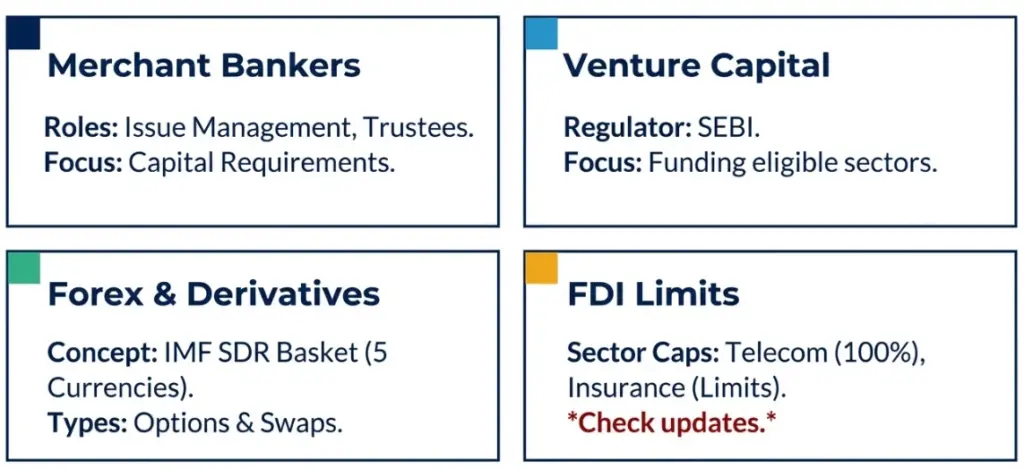
Moderate-frequency topics; scoring if definitions, regulatory framework, and limits are clear.
| Topic | Key Points | Frequency |
| Merchant Bankers | Categories, minimum capital, trustee responsibilities | 1–2 questions per paper; conceptual |
| Venture Capital Fund | Regulated by SEBI; investment norms and eligible sectors | Frequently repeated |
| Derivatives / Options / Forex / Currency Basket | Conceptual understanding; currency basket – IMF SDR 5 currencies | Occasionally numerical; usually conceptual |
| FDI Limits | Sector-wise limits (Telecom 100%, Insurance, etc.) | Repeated in recent papers; regulatory updates |
| Credit Information Companies | Regulatory authority, role in reporting credit information | Occasionally; mostly conceptual |
Which development, sustainability, microfinance, and MSME topics are important for the exam?
These topics appear with medium frequency, and while some are optional, they are scoring if well-prepared. The key topics to focus on are as follows:
| Topic | Key Points | Frequency |
| Sustainable Development Goals (SDG) | 17 Goals; sectors prioritized for development | 1–2 questions per cycle |
| Sunrise Sectors | Recognized sectors for investment and priority allocation | Occasionally asked; scoring if known |
| Microfinance / Grameen Model | Prof. Muhammad Yunus, Bangladesh model; MFI loan limits, borrower income ceiling | Frequently repeated |
| MSME Financing & Venture Capital | Investment and capital limits; regulatory guidelines | 1–2 questions per paper |
Which numerical and formula-based questions appear in the JAIIB IE and IFS papers?
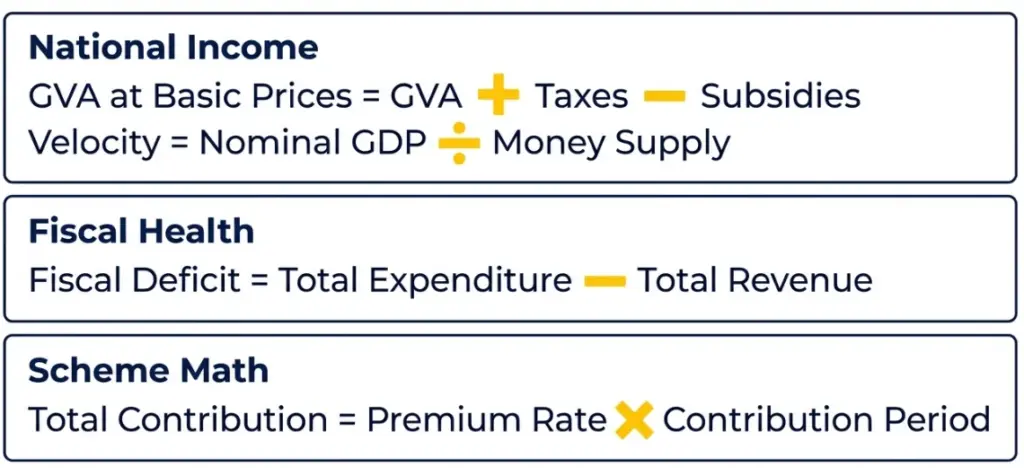
Light, formula-based, and scoring numericals appear across Economic Reforms, Insurance, Pension, PSL, GDP/GVA, Fiscal Deficit.
| Topic | Formula | Frequency |
| GDP / GVA at Basic Prices | GVA + Taxes – Subsidies | 1–2 questions per paper |
| Fiscal Deficit | Total Expenditure – Total Revenue | 1 question; straightforward |
| Velocity of Money | Nominal GDP ÷ Money Supply | 1 question per paper |
| Insurance / EPFO / Pension Contributions | Premium × Contribution | 2–3 small numericals per paper |
| Credit Score / Population Coverage | Direct calculation; scenario-based | 1 question |
What type of case study questions are mostly asked in IE and IFS?
JAIIB PPB case study questions cover practical banking topics such as Banking Operations, MSME, Priority Sector Lending (PSL), Microfinance, and Insurance Schemes. These questions test candidates’ understanding of banking rules and their ability to apply concepts to real-life situations. Regular practice can help improve accuracy and make exam preparation easier.
| Type of Case Study | Example | What is Tested |
| PSL / Priority Sector Lending Cases | A bank has to allocate loans to agriculture, MSME, or housing sectors | Knowledge of PSL sectors, limits, and eligibility |
| Microfinance / MFI Eligibility | Household income ≤3 lakh; borrower applies for a loan | Understanding of microfinance regulations, borrower eligibility |
| Insurance / Pension Schemes | An applicant wants PMSBY, PMJJBY, or APY; calculate premium, coverage, or eligibility | Premium calculation, age limits, contribution, coverage |
| MSME / Venture Capital Funding | Company seeks MSME registration or venture capital funding | Knowledge of investment / capital limits, government schemes |
| Numerical Case Studies | Compute GVA, fiscal deficit, or velocity of money for a hypothetical scenario | Formula application, light numerical calculation |
| Banking Regulation / RBI Guidelines | Bank compliance scenario – CRR, SLR, repo rate, or LAF application | Regulatory knowledge, section application |
Also watch the JAIIB IE and IFS Previous Year Paper Discussion:
| Video Link | Video Link |
| JAIIB PYP Part 1 | JAIIB PYP Part 2 |
JAIIB PPB important topics based on PYP analysis
JAIIB Principles and Practices of Banking (PPB) paper includes concept-based and case study questions based on practical banking situations such as account handling, lending, and legal rules. Candidates should focus on Modules A and B, while giving extra attention to Modules C and D. Reviewing important topics and previous exam trends can help improve preparation and performance.
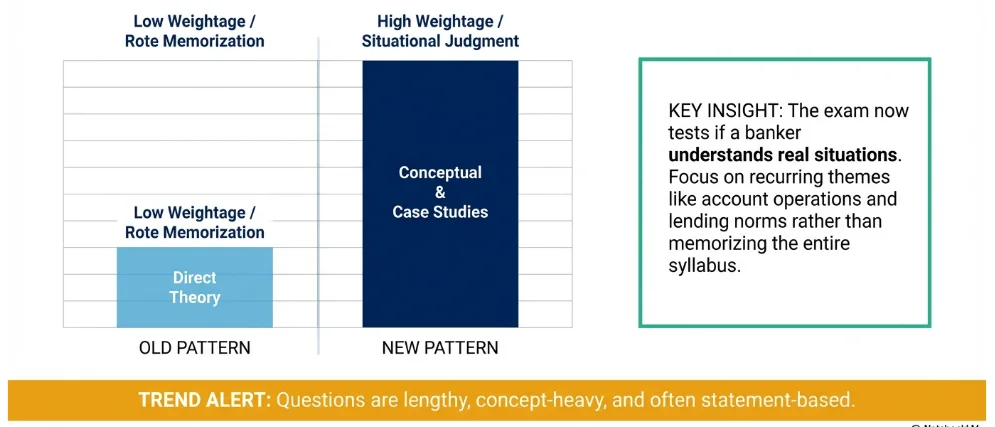
What banking operations and customer relationship topics are asked repeatedly in PPB paper?
Previous year JAIIB papers show that operational banking topics are asked in almost every shift as they are linked to day-to-day branch activities. Questions are often statement-based and test the legal relationship between banker and customer, so candidates should focus on authority, liability, and account handling procedures.
| Topic Area | Key Focus Areas | Exam Importance |
| Minor Accounts | Minor account rules, Indian Majority Act, liability issues | Frequently asked in case studies |
| Joint Accounts | Either or Survivor, Jointly, account closure, death of holder | Important for practical banking questions |
| HUF Accounts | Role of Karta, legal status, member liability | Tests conceptual understanding |
| Mandate vs Power of Attorney | Authority, validity, and legal differences | Common in statement-based MCQs |
| Garnishee & Attachment Orders | Court orders, account freeze, lien, claim priority | Important for legal and case-based questions |
Also Check: JAIIB Exam Pattern
Which credit and loan product concepts appear most in PPB PYPs?
Credit and lending are important scoring areas in the JAIIB PPB paper as they cover core banking functions. Questions are mainly conceptual, with some small calculations and regulatory limits, so candidates should understand the logic behind RBI guidelines instead of only memorising numbers.
| Topic Area | Key Focus Areas | Exam Importance |
| Priority Sector Lending (PSL) | • Sector-wise targets • Sub-targets • Housing loan limits • RIDF deposits with NABARD | Frequently asked; statement-based questions |
| MSME Classification | • Investment limits • Turnover limits • Micro, Small & Medium categories | Definition and application-based questions |
| NPA Norms | • Standard assets • Sub-standard assets • Doubtful & loss assets • Provisioning rules | Tests practical application of NPA rules |
| Agricultural Loan Rules | • Two harvest seasons rule • Maximum two-year limit • Seasonal factors in NPA classification | Asked in MCQs and credit case studies |
| Working Capital Assessment | • Tandon Committee – 2nd method • Nayak Committee – turnover method • Basic calculations | Numerical questions may appear in tougher shifts |
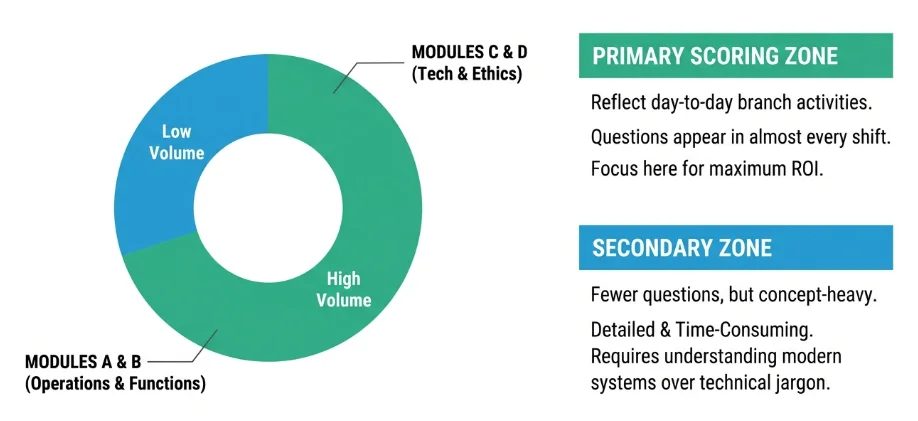
Which banking technology topics should be focused on in PPB Module C?
Module C may have fewer questions compared to other modules, but they are often concept-heavy and require understanding of modern banking systems. Candidates should focus on how technology is applied in real banking processes rather than technical jargon.
| Topic Area | Key Focus Areas | Exam Importance |
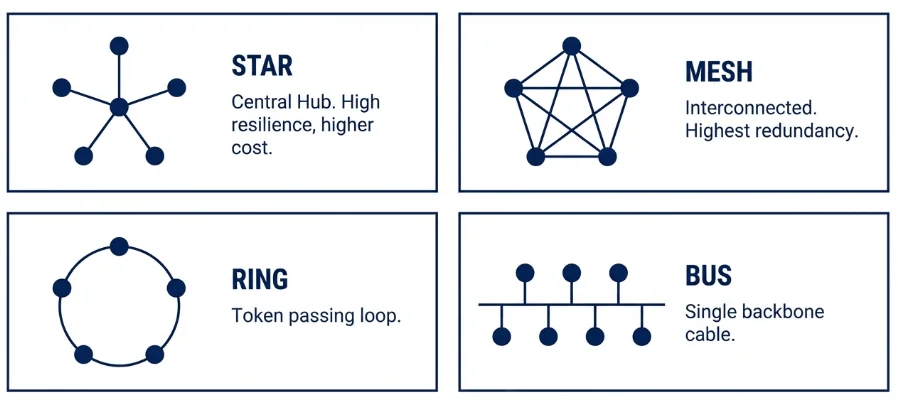
| Network Topologies | • Star, Mesh, Ring & Bus • Features and uses • Advantages & disadvantages | Frequently asked conceptual questions |
| Payment Systems | • NEFT, RTGS, UPI & IMPS • Settlement times • Transaction limits • NFS | Tests practical understanding through comparisons |
| Cheque Truncation System (CTS 2010) | • Image-based clearing • Security features • Faster cheque processing | Common practical technology questions |
| Digital Innovations | • Blockchain • CBDC • Uses in banking | Increasing focus on new banking technologies |
| Cloud Computing & Security | • Data storage • Risk management • Cyber security controls | Statement-based questions on digital risks and security |
Which regulatory and legal framework topics are frequently tested?
Legal awareness is essential in PPB because bankers are expected to understand customer rights and bank liabilities. Many questions describe real legal situations and ask candidates to identify the correct rule or section.
| Negotiable Instruments Act | • Section 138 – Cheque dishonour • Section 85 – Paying banker protection • Holder in Due Course | Frequently asked in cheque operation questions |
| Holder in Due Course | • Rights and protections • Conditions to qualify • Transferability of instruments | Tests legal ownership and transfer concepts |
| Banking Ombudsman Scheme | • Complaint process • Award limits • Ombudsman’s authority | Important for customer protection questions |
| Consumer Protection Act | • Role of CCPA • Customer rights • Grievance handling | Tests customer protection and regulatory awareness |
What numericals and case studies dominate recent PPB exams?
Recent PPB paper analysis clearly shows an increase in lengthy case studies, especially in tougher shifts. These questions are usually worth two marks and require careful reading, logical thinking, and application of rules.
- Operating Cycle Calculations: Calculate inventory, receivable, and payable periods to find the total operating cycle.
- Current Ratio and Financial Ratios: Learn key formulas and understand how financial ratios are used in credit analysis.
- NPA Provisioning: Understand provisioning rules based on asset classification and available security as per RBI norms.
- Locker Liability Cases: Know the bank’s liability in cases of negligence and the compensation limit linked to annual locker rent.
- Banker–Customer Relationships: Understand relationships such as Bailor–Bailee, Lessor–Lessee, and Agent–Principal in different banking services.
- Indemnity and Bank Guarantees: Learn about indemnity bonds, duplicate Demand Drafts, and different types of bank guarantees.
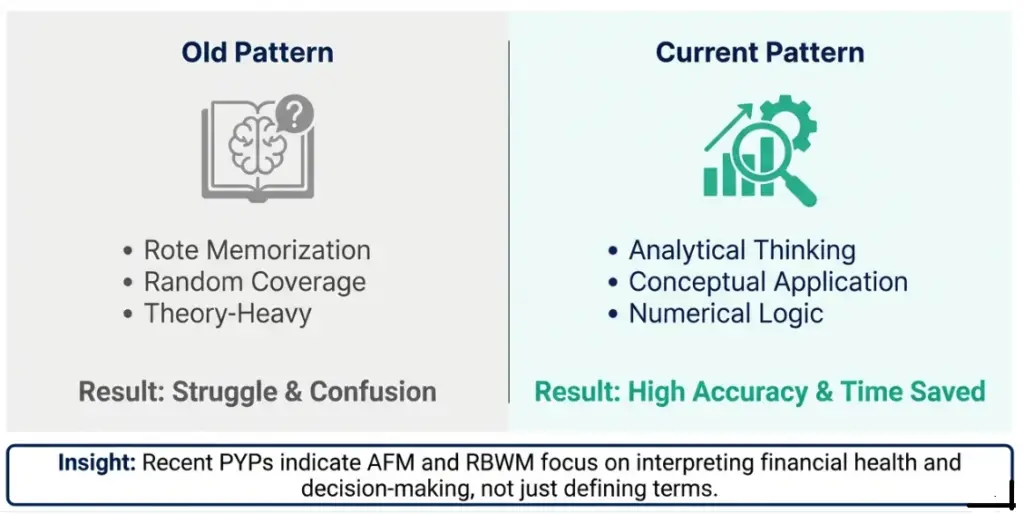
What are the JAIIB AFM important topics based on PYP analysis?
JAIIB AFM previous year paper analysis shows that strong concepts and regular numerical practice are important for good performance. Memory-based questions mainly cover Accounting Standards, Banking Accounts, Financial Management, and Ratio Analysis, so candidates should focus on these topics to improve accuracy, strengthen concepts, and manage time effectively.
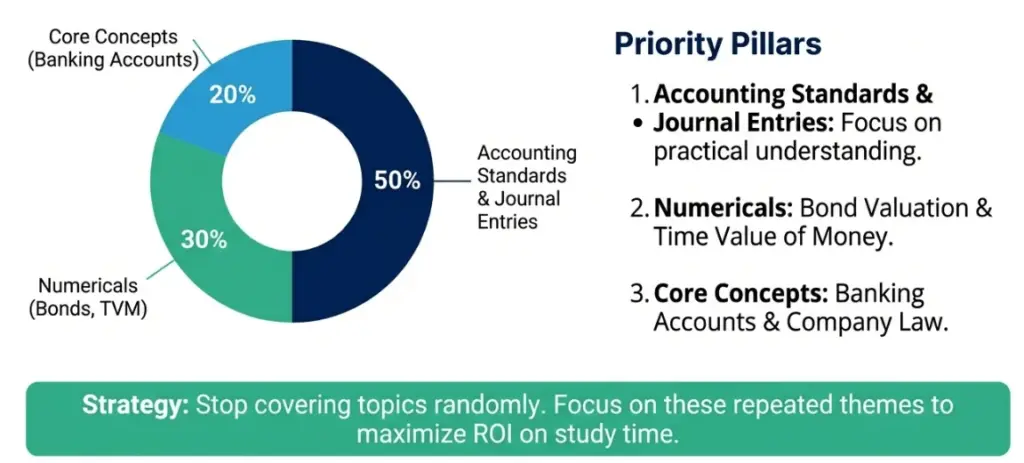
Why are Accounting Standards and journal entries repeatedly asked in AFM paper?
Accounting Standards and journal entries are asked frequently because they test practical accounting understanding. The examiner checks whether you know how financial transactions are actually recorded and reported, not just the theory behind them.
- Accounting Standards: Focus on key rules of AS 2, AS 3, AS 9, AS 10, AS 19, and AS 26, especially valuation, revenue, leases, and assets.
- Journal Entries: Practise entries for prepaid expenses, share forfeiture, asset purchases, and securities premium.
- Classification of Accounts: Revise personal and real accounts with simple examples to identify the correct account type before passing entries.
Also Check: JAIIB Paper Wise Exam Date 2026
How important are Bond valuation and Time Value of Money numericals in AFM?
Numerical questions may form a smaller portion of the paper, but they are scoring areas if formulas and concepts are clear. Most calculations are direct applications of financial management principles.
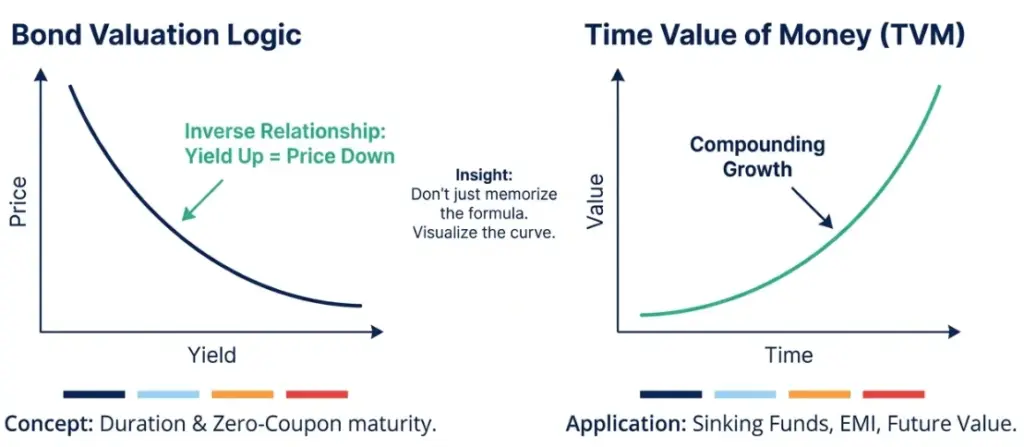
- Bond Valuation and YTM: Understand the link between bond price and yield, along with duration and zero-coupon bonds.
- Annuity and Time Value of Money: Practise present value, future value, sinking fund, and EMI calculations. Keep key formulas ready for quick revision.
- Depreciation Methods: Focus on WDV and Sum of Years’ Digit methods. Practise step-by-step calculations to solve numerical and concept-based questions.
What role do Banking Company Accounts and Company Law concepts play in AFM?
Banking and company law topics connect accounting knowledge with regulatory frameworks, which is why they appear regularly in AFM exams. These areas usually involve conceptual clarity and structured formats.
| Area Covered | What examiners expect | How you should prepare |
| Banking Company Accounts | Understanding of balance sheet format, Profit and Loss structure, and schedules such as Schedule 10 and Schedule 18. | Study the structure of banking financial statements and revise how items are grouped under different schedules. |
| Company Law Rules | Questions test knowledge of membership requirements, share capital rules, and provisions like Section 52 related to security premium. | Link company law sections with accounting treatment so that concepts become easier to remember during revision. |
| Share Capital Concepts | Over-subscription, premium utilisation, and allotment adjustments are common themes. | Practise journal entries related to share capital from past questions to build confidence. |
Also Check: JAIIB AFM Exam Analysis
Which Ratio Analysis and Working Capital topics appear most in AFM PYPs?
Ratio analysis and working capital questions test your ability to interpret financial health, not just calculate numbers. These areas are usually straightforward if fundamentals are clear.
| Topic | What the exam focuses on | How you should prepare |
| Current Ratio and Quick Ratio | Candidates must calculate liquidity ratios and interpret whether the company’s financial position is stable. | Remember that liquid assets exclude stock and prepaid expenses and practise solving ratios from simple balance sheet data. |
| Debt Equity Ratio | Questions analyse leverage and financial risk through conceptual understanding of borrowed funds and owner’s equity. | Understand the meaning behind the ratio rather than only memorising formulas. |
| Working Capital Assessment | Tandon Committee and Nayak Committee methods are used to test understanding of permissible bank finance. | Study practical banking examples so that you can apply formulas easily in case-study questions. |
What special “trap” concepts and niche areas should you revise before the JAIIB AFM exam?
AFM papers often include small conceptual questions that look easy but are designed to test attention to detail. Revising these niche areas can help avoid unnecessary mistakes.
| Niche Concept | Key Focus |
| GST Penalties and Regulatory Numbers | Revise important penalty rates, interest rates, limits, and other regulatory figures. |
| Dormant Company Definition | Understand the meaning of a dormant company and its key features. |
| Zero-Coupon Bonds | Remember that the duration of a zero-coupon bond equals its maturity period. |
JAIIB RBWM important topics based on PYPs analysis
The JAIIB RBWM paper focuses on banking products, customer service, government schemes, and wealth management. Modules B and D carry good weightage, with numerical, case study, and statement-based questions. Candidates should focus on PMAY, retail loans, marketing concepts, and regulatory guidelines.
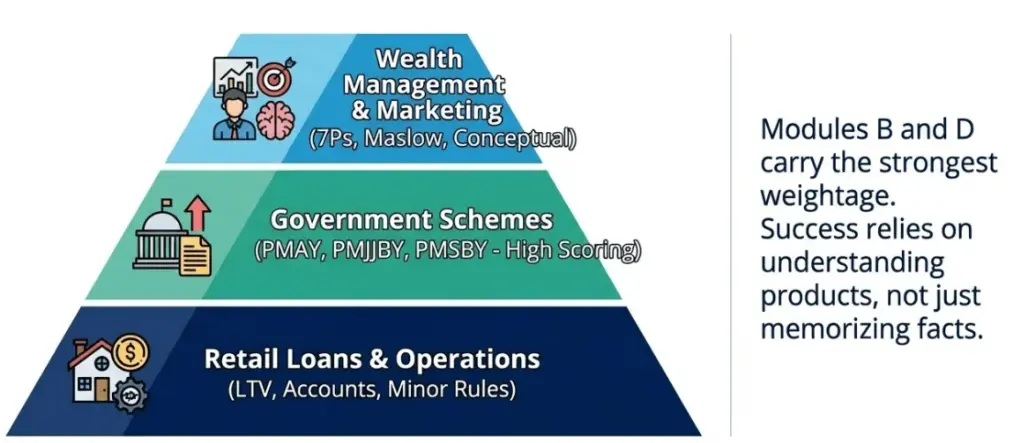
What government schemes and social security topics are frequently asked in JAIIB RBWM?
Government schemes are one of the most scoring areas in RBWM because questions are often direct but detail-oriented. Candidates are expected to remember eligibility criteria, subsidy rates, age limits, and premium details. Questions from PMAY, PMJJBY, and PMSBY are commonly asked in both theory and case-based formats.
| Topic Area | Key Focus |
| PMAY Income Categories | Revise EWS, LIG, and MIG categories along with their income limits. |
| Interest Subsidy Structure | Understand subsidy rates across different PMAY beneficiary categories. |
| PMJJBY Scheme | Focus on age eligibility, annual premium, life cover, and waiting period. |
| PMSBY Coverage | Revise age eligibility, accidental insurance cover, premium, and waiting period. |
Also Check: List of Central and State Gov. Schemes
Which retail loan products and banking operations topics have high weightage?
Retail loans and customer account operations are key topics in RBWM. Focus on LTV ratios, minor account rules, education loan security requirements, and BSBD account limits, as these rule-based topics can help you score well in the exam.
| Topic Area | Key Focus |
| Home Loan LTV Ratios | Understand how loan eligibility changes with the property value and borrower contribution. |
| Education Loan Security Norms | Revise security and guarantee requirements based on the loan amount. |
| Minor Account Operations | Learn the age limits, account operation rules, and signing authority for minors. |
| BSBD and Small Accounts | Focus on balance, credit, and withdrawal limits related to these accounts. |
Also Check: JAIIB registration Process here
What marketing and wealth management concepts are repeatedly tested in RBWM paper?
Marketing and wealth management are scoring topics in RBWM with a clear understanding of key concepts. Focus on the marketing mix, customer segmentation, and investment services like Portfolio Management Services (PMS), as questions may also cover practical banking scenarios and case studies.
| Topic Area | Key Focus |
| Marketing Mix Framework | Revise the 4Ps: Product, Price, Place, Promotion, and the additional 7Ps: People, Process, and Physical Evidence. |
| Product Life Cycle | Understand Introduction, Growth, Maturity, and Decline stages, along with changes in demand and competition. |
| Portfolio Management Services (PMS) | Focus on minimum investment requirements, regulatory norms, and its role as a specialised wealth management service. |
| Customer Need Analysis | Understand Maslow’s Hierarchy of Needs and how banking products address different customer needs. |
Which numericals, case studies, and regulatory details should you prioritise for RBWM preparation?
As per the JAIIB RBWM paper analysis the numerical questions and regulatory concepts together contribute a significant portion of marks. The exam expects candidates to apply formulas, interpret financial ratios, and understand legal frameworks like SARFAESI and DRT procedures. These areas require practice along with conceptual clarity.
| Topic Area | Key Focus Areas |
| Time Value of Money | • Present Value (PV) • Future Value (FV) • Rule of 72 & Rule of 144• Compounding concepts |
| Financial Ratios in Retail Banking | • FIOR • Net Profit Margin • Return on Assets (ROA) • Ratio interpretation |
| Capital Gains & Indexation | • Long-term & short-term gains • Cost Inflation Index (CII) • Holding period rules • Case-based calculations |
| SARFAESI & CERSAI Timelines | • Registration deadlines • Penalties • Borrower rights • Recovery law provisions |
| DRT & Customer Liability Rules | • DRT threshold limits • Debt recovery process • Liability limits for unauthorised electronic transactions |
Why should professionals practise and revise JAIIB previous year papers?
Practising previous year papers (PYPs) is crucial for working professionals because of limited preparation time and the evolving exam pattern and syllabus. Key benefits include:
- Spot high-weightage questions: Identify topics that appear every year, like NPA rules, PSL limits, EPF/APY contributions, PMAY eligibility, and RBI regulations.
- Master multi-statement questions: Previous papers show how PPB and RBWM exams ask multiple statements per question, requiring precise understanding.
- Familiarity with case studies: Learn how real banking situations like minor accounts, loan defaults, or insurance claim calculations are framed in exams.
- Practice formula-based numericals: Repeated calculations on fiscal deficit, GVA, bond valuation, and working capital appear across IE, AFM, and PPB.
- Recognise tricky “trap” questions: Past papers reveal subtle wording in areas like zero-coupon bonds, dormant companies, or GST penalties, helping avoid mistakes.
FAQs
It is a set of questions from the actual JAIIB exam, recalled by candidates.
They help understand exam patterns and commonly asked questions.
There are four papers: IE & IFS, PPB, AFM, and RBWM.
We have interlinked the subject wise memory based papers in the blog above.
- JAIIB 2026 Previous Year Papers, Download Free PDF
- JAIIB IE & IFS Module-Wise Mind Maps, Download Free PDF
- Functions of Bank Relationships, Norms and Download Free PDF
- JAIIB PPB Important RBI Guidelines and Banking Limits
- Essentials of Bank Computerization for JAIIB, Download Free eBook
- JAIIB AFM Formulas and Short Tricks, Check Details

Hi, I’m Aditi. I work as a Content Writer at Oliveboard, where I have been simplifying exam-related content for the past 4 years. I create clear and easy-to-understand guides for JAIIB, CAIIB, and UGC exams. My work includes breaking down notifications, admit cards, and exam updates, as well as preparing study plans and subject-wise strategies.
My goal is to support working professionals in managing their exam preparation alongside a full-time job and to help them achieve career growth.