IBPS PO Admit Card 2026 Out
IBPS PO Prelims Admit Card 2026 Out- Exam on 22nd & 23rd August
IBPS PO Admit Card 2026 is out! Download the Prelims Call Letter, check exam dates, shift timings, handout, documents and exam-day instructions.
Download IBPS PO PYPs
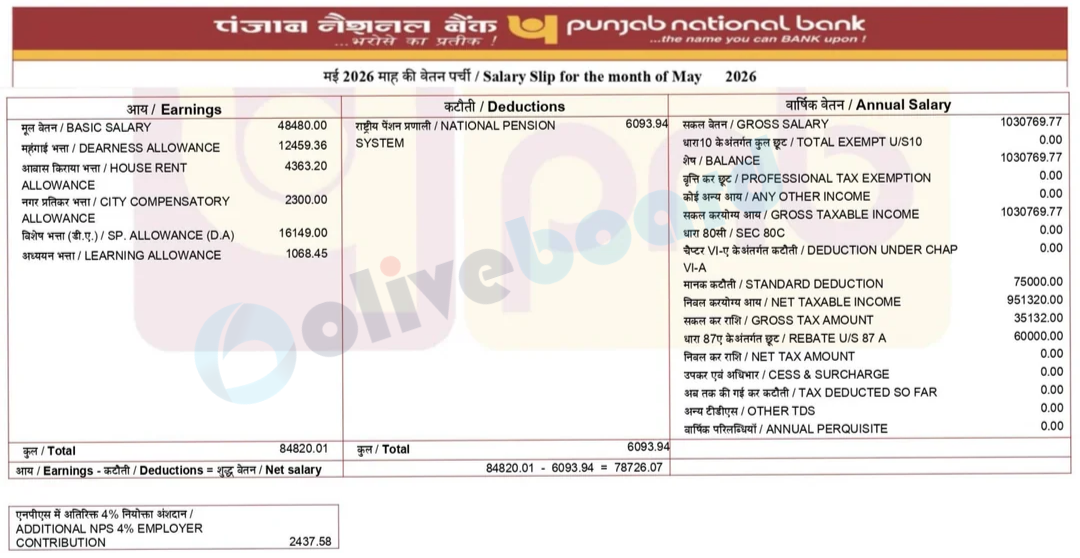
Disclaimer: This is a real salary slip of a newly joined PO Officer at PNB, shared on a social media platform.
The IBPS PO salary 2026 is one of the most searched banking exam topics in India, covering the Probationary Officer pay scale, basic salary, in-hand salary, allowances, deductions, and career growth. The salary is structured under JMGS-I with a starting basic pay of ₹48,480, and after adding DA, HRA, and special allowances, the gross monthly salary reaches around ₹88,000–₹92,000 depending on location. After deductions like NPS and taxes, the in-hand salary generally ranges between ₹70,000–₹76,000, making IBPS PO one of the highest-paying entry-level government jobs in India
IBPS PO Salary 2026
The IBPS PO salary 2026 follows the JMGS-I pay scale under the 12th Bipartite Settlement, which includes a structured basic pay along with multiple allowances such as Dearness Allowance (DA), House Rent Allowance (HRA), Special Allowance, and City Compensatory Allowance. The starting basic pay is ₹48,480, and salary increases through periodic increments and promotions over time. This structured system ensures long-term financial stability and consistent salary growth for banking officers.
| Component | Details |
|---|
| Post | Probationary Officer (Scale-I) |
| Basic Pay | ₹48,480 |
| Pay Scale | ₹48,480 – 2000/7 – 62,480 – 2340/2 – 67,160 – 2680/7 – 85,920 |
| Salary Type | Increment-based structured pay system |
| Job Category | Public Sector Banking Officer |
Attempt IBPS PO Mock Test
IBPS PO In-Hand Salary 2026
The IBPS PO in-hand salary refers to the actual monthly salary credited after deductions such as NPS contribution, professional tax, and other statutory deductions. It varies depending on the city of posting because HRA and other allowances differ for metro, urban, and rural branches. Despite deductions, the IBPS PO offers one of the highest in-hand salaries among entry-level government jobs.
| Location Type | In-Hand Salary |
|---|
| Metro Cities | ₹74,000 – ₹76,000 |
| Urban Areas | ₹72,000 – ₹74,000 |
| Rural Areas | ₹70,000 – ₹73,000 |
IBPS PO Salary Structure
After combining all components, the gross monthly salary of an IBPS PO is approximately ₹88,000–₹92,000 before deductions. The IBPS PO salary structure includes multiple allowances that significantly increase the gross monthly income beyond the basic pay. These allowances are revised periodically through wage settlements and inflation-based DA updates, making DA the most dynamic component of the salary structure.
| Allowance | Description |
|---|
| Dearness Allowance (DA) | Inflation-linked allowance revised quarterly |
| House Rent Allowance (HRA) | Based on metro/urban/rural classification |
| Special Allowance | Fixed banking sector allowance |
| City Compensatory Allowance | Paid in selected cities |
| Medical Allowance | Fixed healthcare benefit |
| Transport Allowance | Monthly travel support |
Enroll in IBPS PO Online Course
IBPS PO Salary Deductions
The gross salary is reduced by certain mandatory deductions before arriving at the final in-hand salary. These deductions mainly include retirement savings, insurance contributions, and statutory taxes. While they reduce immediate take-home pay, they ensure long-term financial security for employees. Total deductions generally range between ₹8,000–₹12,000 per month, depending on allowances and bank policies.
| Deduction Type | Purpose |
|---|
| NPS Contribution | Pension and retirement fund |
| Professional Tax | State government tax |
| Other Deductions | Insurance & welfare contributions |
Solve IBPS PO Practice Paper
IBPS PO Perks and Benefits
Apart from salary, IBPS PO officers receive several additional benefits that significantly increase the overall compensation value. These perks improve financial stability, lifestyle quality, and long-term security for employees and their families.
- Dearness Allowance (DA)
- House Rent Allowance (HRA)
- Special Allowance (SA)
- City Compensatory Allowance (CCA)
- Learning Allowance
- Travelling Allowance
- Newspaper Allowance
- Medical Facilities
- New Pension Scheme Benefits
Check Topper's Strategy to Crack IBPS PO Exam
IBPS PO Salary Slip
Interestingly, this real slip closely matches the estimated in-hand salary range mentioned earlier, confirming that a newly joined IBPS PO can realistically expect around ₹75,000–₹79,000 in-hand per month, depending on the bank and posting location. The slip also shows an additional 4% employer NPS contribution of ₹2,437.58, which adds to the officer's long-term retirement corpus over and above the monthly take-home pay.
| Component | Amount (₹) |
|---|
| Basic Salary | 48,480.00 |
| Dearness Allowance (DA) | 12,459.36 |
| House Rent Allowance (HRA) | 4,363.20 |
| City Compensatory Allowance | 2,300.00 |
| Special Allowance | 16,149.00 |
| Learning Allowance | 1,068.45 |
| Gross Earnings | 84,820.01 |
| NPS Deduction | 6,093.94 |
| Net Salary (In-Hand) | 78,726.07 |
FREE IBPS PO Quizzes
Attempt these free quizzes for your IBPS PO Exam.
IBPS PO Career Growth and Promotion Structure
The IBPS PO role offers structured career growth with promotions based on experience, performance, and internal exams. Over time, officers move into higher managerial roles with significantly higher salaries and responsibilities. With promotions, salary can easily exceed ₹1 lakh per month, making it a highly growth-oriented banking career. The typical promotion hierarchy is:
| Level | Position |
|---|
| Entry | Probationary Officer |
| Level 1 | Assistant Manager |
| Level 2 | Manager |
| Level 3 | Senior Manager |
| Level 4 | Chief Manager |
| Senior Level | AGM / DGM / GM |